What Can You Make in a Food Processor?
You can make salsa, hummus, pesto, chopped vegetables, shredded cheese, breadcrumbs, and pie dough in a food processor. Some models also knead bread dough; choose the attachment and batch size to match your recipe.
On this page (9 sections)
- What can you make in a food processor?
- Can you chop vegetables and nuts?
- Can you slice or shred food in a processor?
- Can you make sauces, dips, and purees?
- Can a food processor knead dough or make pastry?
- How should you set up and clean a food processor?
- What should you avoid making in a food processor?
- Which food processor fits what you want to make?
- What should you make in your food processor most often?
You can make salsa, hummus, pesto, chopped vegetables, shredded cheese, breadcrumbs, and pie dough in a food processor. Some models also knead bread dough, but the right attachment and batch size matter more than a long recipe list.
Start with the foods you make each week. A processor earns its space when it handles a bowl of slaw, several chopped onions, or a dip; for one clove of garlic, a knife may mean less cleanup.
What can you make in a food processor?
A food processor makes chopped mixtures, slices, shreds, thick purees, and some doughs. The chopping blade works inside the bowl, while slicing and shredding discs process food fed through the lid.
| Food or recipe | Attachment | Useful starting tip |
|---|---|---|
| Onions for soup or chili | Chopping blade | Cut into similar chunks, then pulse |
| Chopped nuts | Chopping blade | Stop before they become a meal or paste |
| Breadcrumbs | Chopping blade | Tear bread into pieces first |
| Cucumber or potato slices | Slicing disc | Trim pieces to fit the tube |
| Cheese or cabbage shreds | Shredding disc | Empty the bowl before shreds crowd the disc |
| Salsa or guacamole | Chopping blade | Pulse to keep some texture |
| Hummus or pesto | Chopping blade | Scrape the bowl and add liquid gradually |
| Pie crust | Approved mixing blade | Keep ingredients cold and pulses brief |
| Bread dough | Approved kneading attachment | Follow the model's flour and run-time limits |
What can you make first in a food processor?
Start with chopped onions or a chunky salsa because you can see the texture change with each pulse. These jobs teach you when to stop without requiring a smooth puree or a dough technique.
For salsa, drain very watery ingredients and add them gradually. A processor can chop food smaller, but it can't restore chunks once you've turned them into a puree.
Can you chop vegetables and nuts?
Yes, use the chopping blade to mince vegetables, chop nuts, or make crumbs. Short pulses give you more control than leaving the motor running.
Cut firm vegetables into similar pieces before loading them. Mixing a whole carrot with small onion pieces makes an uneven chop more likely because the smaller food breaks down first.
Wash and dry herbs before chopping them. Wet leaves tend to cling together, and long processing can turn a loose herb mixture into a paste.
The Hamilton Beach 70730 suits cooks who switch between chopped vegetables and thick mixtures. Its built-in bowl scraper moves food off the sides without removing the lid, and its low, high, and pulse controls let you adjust the texture.
Skip this model if most recipes contain only a few spoonfuls of ingredients. Tiny batches can sit below or beyond a large blade's useful reach, even when the bowl has plenty of spare space.
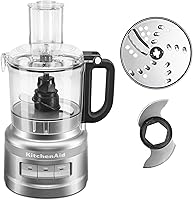
The KitchenAid KFP0718 suits smaller everyday recipes and cooks who want accessories stored together. Its blade and disc fit inside the bowl, and the twist-free assembly uses a latched lid.
Skip it if you regularly prepare large batches of slaw or vegetables and want fewer rounds of filling and emptying. For assembly and pulse control, see how to use a food processor.
Can you slice or shred food in a processor?
Yes, a slicing or shredding disc can prepare salad vegetables, slaw, potato slices, and cheese shreds. A chopping blade won't produce the same shapes, so choose the attachment before loading any food.
Use chilled firm cheese for cleaner shreds, and trim cabbage into wedges that fit the feed tube. Soft cheese can smear, while loosely packed ingredients may tilt and produce uneven pieces.
Use the supplied pusher with steady, gentle pressure. Forcing food down doesn't improve the cut and can pack the bowl too quickly.
The Cuisinart includes a fixed 4 mm slicing disc and a medium shredding disc. Choose it for larger prep sessions when those cuts match your recipes; skip it if adjustable slice thickness is a priority.
Its 18-pound weight also matters if you'll lift it out of a cupboard for every meal. Measure the storage space and plan where the discs will sit before choosing a larger machine.
Learn more about what food processor blades and discs do, or read whether a food processor can shred cheese.
Can you make sauces, dips, and purees?
Yes, the chopping blade can make hummus, pesto, bean dips, guacamole, and thick sauces. Cook firm ingredients until tender when the recipe calls for a smooth puree, then cool them as required by your manual.
For hummus, process the chickpeas and other ingredients, scrape the bowl, and add liquid in small amounts. Pouring in too much at once can leave you with a thin dip before the solids break down.
For pesto, pulse the herbs, nuts, and other solid ingredients before adding oil gradually. Stop at the texture you want rather than using a fixed run time for every batch.
Unplug the processor before scraping with a spatula. The Hamilton Beach's built-in scraper is designed to work with the lid closed, including while the motor runs; that doesn't make it safe to insert a separate utensil.
Liquid capacity is lower than dry bowl capacity on many processors. Follow the marked liquid limit and temperature guidance, especially for soup, rather than treating the bowl's cup size as a safe fill line.
Can a food processor knead dough or make pastry?
Some models can knead bread dough, and suitable processors can mix pie crust by cutting cold fat into flour. These are different jobs: bread dough needs gluten development, while pastry needs restraint to stay tender.
The Cuisinart supports kneading and suits cooks who want that task alongside larger vegetable prep. Follow its instructions for blade choice, flour quantity, and run time; a roomy bowl doesn't mean it can knead a full bowl of stiff dough.
For pastry, pulse until the fat pieces match the recipe's directions. Add cold liquid gradually and stop when the mixture holds together when pressed, rather than waiting for a smooth ball.
If the dough warms noticeably or the motor labors, stop. Don't keep running the machine in the hope that a stiff mixture will loosen on its own.
Read how to knead dough in a food processor for bread guidance, or follow how to make pie dough in a food processor for pastry.
How should you set up and clean a food processor?
Set it on a dry, level counter, then assemble the bowl, attachment, and lid as the manual directs. Keep it unplugged while fitting or changing sharp parts, and check that the lid locks before starting.
For chopping, fit the blade before adding food. For slicing or shredding, fit the disc in the correct direction and keep the pusher ready before switching on.
After use, unplug the base and remove food before it dries into the lid or blade hub. Wash sharp parts separately, hold them by their safe hubs, and never leave a blade hidden in soapy water.
The KitchenAid allows a warm-water wash with 1–2 drops of dish soap in its bowl, following its directions. For all 3 machines, check the manual for each part's wash method and dishwasher placement.
Wipe the motor base with a damp cloth rather than immersing it. Dry parts before storage, and use this food processor cleaning guide for awkward seams and trapped food.
What should you avoid making in a food processor?
Avoid unapproved hard ingredients, oversized dough batches, and excess liquid. Don't assume a processor can crush ice, grind coffee, or handle boiling soup because it can chop carrots.
Thin smoothies and large batches of liquid usually suit a blender better. A processor is more useful when you want chopped solids or a thick mixture you can scoop.
The most common texture mistake is running everything continuously. Pulse soft vegetables, check nuts often, and process ingredients in stages when they need different amounts of chopping.
Which food processor fits what you want to make?
Choose by your usual recipe size, required cuts, and storage habits. Motor wattage alone doesn't tell you whether the bowl or attachments suit dinner.
- Choose Cuisinart for larger prep sessions and dough. It fits cooks who regularly shred, slice, and mix in quantity and can give a heavier machine a practical home.
- Choose KitchenAid for smaller everyday batches. Its High, Low, and Pulse controls and reversible medium slice/shred disc cover common prep, with accessories stored in the bowl.
- Choose Hamilton Beach for dips and mixed meal prep. Its scraper is useful when thick ingredients collect on the sides, alongside chopping and disc work.
Don't buy extra capacity just to cover a recipe you rarely make. Compare your regular portions with the manual's working limits, then use how to choose a food processor to narrow the size and attachment choices.
What should you make in your food processor most often?
Make the foods that save you repeated prep work: slaw for several meals, chopped vegetables for soup, shredded cheese, or a batch of hummus. Choose a larger processor for those bulk jobs and a smaller one when modest portions are your routine.
If bread dough is a regular goal, choose a model approved for kneading. If you mainly want smoothies, keep the focus on a blender rather than buying a processor for that single task.
Use the food processor buying guide to compare your options. Once you've chosen, follow how to use a food processor and start with one recipe whose texture you can check as you go.
Frequently asked questions
What foods can you make in a food processor?
You can make chopped vegetables, shredded cheese, breadcrumbs, salsa, hummus, pesto, and pastry mixtures in a food processor. A chopping blade breaks down and mixes ingredients, while discs slice or shred them.
Bread dough needs a model approved for kneading, and each recipe must stay within its batch limits.
Can you make smoothies in a food processor?
A food processor can blend soft fruit with a little liquid, but a blender is usually the better choice for pourable smoothies. A processor's wide bowl suits thicker mixtures and may leave a less even drink.
Follow its liquid limit, and only process ice or frozen fruit if the manual permits.
Can a food processor knead dough?
Some food processors can knead bread dough, provided the model and blade are approved for it. Follow the manual's flour limit and run time rather than judging by bowl size alone.
For pie dough, use brief pulses to cut cold fat into flour, then stop before the mixture becomes a paste.
What should you not put in a food processor?
Keep fingers, utensils, and ingredients prohibited by the manual out of a running food processor. Don't assume it can crush ice, grind coffee, or handle hot liquids.
Remove fruit pits and hard shells, respect fill limits, and unplug the machine before clearing food from the blade or changing attachments.