Food Processors: The Complete Buying Guide
Choose a food processor for your usual batch size and most frequent prep jobs. A mini suits herbs and dressings, a mid-size model handles everyday meals, and a larger bowl gives batch cooks more room.
On this page (12 sections)
- What should a food processor do?
- What size food processor do you need?
- Which food processor parts matter most?
- What do motor watts and controls tell you?
- How much room do food processors take?
- How should you compare food processor cleanup?
- How do four food processors compare?
- How do you set up and use a food processor?
- Which mistakes cause uneven food or extra work?
- When is a mini chopper enough?
- Food processor vs blender: which one do you need?
- Which food processor should you choose?
Choose a food processor that fits your usual recipes, rather than the largest bowl or longest feature list. A mini makes sense for herbs and small sauces, a mid-size machine suits everyday meal prep, and a larger bowl helps with batch cooking.
The right attachments matter just as much as size. A chopping blade won't replace a slicing disc, and a dough setting doesn't remove the need to follow batch limits.
Start with the jobs you repeat each week, then work through bowl size, storage and cleanup. For a model shortlist, see our best food processors guide.
What should a food processor do?
A food processor should reduce repeated chopping, slicing, shredding or mixing in your normal cooking. Its value comes from replacing enough knife or grater work to make assembly and washing worthwhile.
Think of the machine as several tools that share a motor base. The attachment you fit determines the cut, while processing time helps control the final texture.
| Common task | Part to look for | Main buying check |
|---|---|---|
| Chop onions or vegetables | Chopping or multipurpose blade | Pulse control and a suitable bowl size |
| Make hummus or other dips | Chopping or mixing blade | Enough room for the mixture to circulate |
| Slice vegetables | Slicing disc | Fixed or adjustable thickness |
| Shred cheese or vegetables | Shredding disc | Shred size and feed tube fit |
| Mix dough | Approved blade and dough-capable setup | Recipe and batch limits |
| Make a little dressing | Small work bowl or mini processor | Whether the blade can reach the ingredients |
A processor is especially useful when several ingredients need the same treatment. Shredding vegetables for slaw gives it more work to replace than chopping a single garlic clove.
It also helps with texture control, provided you stop at the right point. Short pulses can leave a coarse salsa, while longer processing moves a suitable mixture toward a puree.
Don't expect every cut from the main blade to look identical. For neat cubes, check for a dedicated dicing attachment; neither a standard chopping blade nor a slicing disc does that job.
Our guide to food processor blades and discs explains which attachment produces each result.
What size food processor do you need?
Choose the smallest bowl that handles your usual recipe comfortably, with space for food to move. Buy extra capacity when splitting your regular prep into batches would become a chore.
A mini suits small sauces, herbs and modest chopping jobs. Mid-size bowls provide more room for meal prep, while larger bowls make sense for repeated batches of vegetables or bigger recipes.
Household size helps, but it isn't the whole answer. A solo cook who prepares meals for several days may need more space than a larger household that mostly cooks fresh, small portions.
How do you choose the right food processor bowl size?
Use 2 or 3 regular recipes to choose your food processor's bowl size. Note the largest amount you need to process at one time, rather than adding up every ingredient in the finished meal.
For example, vegetables added in separate stages don't all need to fit together. A dip made as one mixture does need enough working room for its full batch.
Bowl capacity is not the same as a liquid limit or dough allowance. Follow the marked fill lines and manual because these limits can be lower than the bowl's headline size.
Small batches create the opposite problem. A spoonful of ingredients can sit below or outside the blade's useful reach in a large bowl, leaving you to scrape repeatedly.
Choose around your most frequent task, then accept an occasional compromise. Running 2 batches for a rare gathering is more sensible than storing an oversized machine for months.
If both tiny sauces and large prep sessions are weekly jobs, a mini and full-size processor can serve different purposes. Make sure both would earn their storage space before buying a second appliance.
Our food processor size guide gives more help matching capacity to your cooking pattern.
Which food processor parts matter most?
The main blade, cutting discs and feed tube matter more than a long attachment count. Check that the included tools cover the cuts you actually want.
Chopping blades and cutting discs
A chopping or multipurpose blade works inside the bowl for chopping, mixing and pureeing. You load ingredients around it and control texture with processing time.
A cutting disc usually sits near the top of the bowl. Food passes through the feed tube, meets the disc and falls into the bowl as slices or shreds.
A reversible disc combines 2 functions in one piece. Separate discs take more storage space, but either arrangement can cover the same basic tasks if the cuts suit your recipes.
Fixed thickness is a buying decision, not a minor detail. If you want both thin cucumber slices and thicker potato slices, check for suitable adjustment or additional discs before choosing.
Don't assume accessories from another model will fit. Match replacement parts to the exact model, including any stem or adapter needed to mount them.
Feed tubes and pushers
A wider feed tube can reduce trimming before slicing or shredding. You may still need to cut food into manageable pieces so it enters without force.
A smaller opening can help guide narrow ingredients upright. Feed tube shape also affects how you position a carrot, cucumber or block of cheese.
Use the supplied pusher with steady pressure. Pressing harder isn't a substitute for cutting an oversized ingredient down to fit.
Do you need a dough blade?
You need a processor approved for your dough and batch, rather than a dough blade alone. Some machines use a separate attachment, while others support dough with a chopping or mixing blade.
Check flour amounts and recipe instructions, not just the bowl's capacity. Dough loads the motor differently from loose vegetables and can warm as it mixes.
A processor can be useful for bringing pastry ingredients together quickly. Bread dough needs closer attention to mixing time, temperature and the machine's limits.
If baking is a main reason for buying, read our guide to dough in a food processor before settling on a model.
What do motor watts and controls tell you?
Use task support and usable controls to narrow your choice, rather than ranking processors by watts alone. A power figure doesn't describe blade shape, bowl design or every load a machine can handle.
Peak watts and other watt figures aren't directly interchangeable measures of sustained performance. Compare supported recipes and batch limits before treating one number as proof of a stronger machine.
For chunky food, pulse control is especially useful. Brief bursts give you chances to inspect the mixture before it becomes finer than you wanted.
Continuous operation suits jobs where a smoother texture is the goal. Stop as needed to scrape safely, and follow any run-time or rest instructions.
Presets suit cooks who prefer a program for a familiar task. They still need the right attachment, prepared ingredients and a suitable quantity.
Simple controls suit cooks who want to judge texture as they go. More buttons don't automatically make a processor more useful, but convenient settings can encourage regular use.
How much room do food processors take?
Measure working space, storage space and lifting access before you choose. The processor needs room for its assembled height, plus space to load food and remove the lid.
A machine can fit under a cabinet yet be awkward to use there. Check whether you can lift out the pusher and open or remove the lid without moving it each time.
Also measure the cupboard opening, not just the shelf behind it. A tall feed tube or wide handle can make an otherwise suitable storage spot inconvenient.
Weight matters if the machine will move before every meal. A heavier model may suit a permanent counter position, while frequent cupboard storage makes lifting comfort more important.
Plan where the blade, discs and pusher will go. Loose sharp parts shouldn't share a crowded drawer with utensils you grab without looking.
In-bowl storage can keep accessories together, but you'll need to remove them before cooking. Dry everything fully before closing it inside the bowl.
If small prep jobs dominate, our best mini food processors guide can help you avoid giving up more space than necessary.
How should you compare food processor cleanup?
Compare the parts you'll wash after your usual recipe, including the lid, pusher and blade hub. Dishwasher compatibility helps, but easy disassembly and accessible seams matter too.
Sticky dough, oily dips and cheese need more attention than dry crumbs. Think about your common ingredients when judging whether a cleanup routine will fit your day.
Check care instructions for each removable part. Dishwasher-safe bowls don't automatically mean every attachment belongs on any rack or wash cycle.
Keep the motor base out of water and clean its exterior as directed. Unplug it before removing attachments or wiping around the drive area.
Don't leave a sharp blade hidden in cloudy dishwater. Wash it separately, hold it away from the cutting edges and place it somewhere visible to dry.
Rinse removable parts soon after use so food doesn't dry inside small gaps. Inspect the lid seams, underside of discs and blade hub before putting them away.
Our guide to cleaning a food processor covers a practical routine. The dishwasher safety guide explains what to check before loading individual parts.
How do four food processors compare?
Choose among these models by batch size, preferred controls and storage habits. The Cuisinart suits larger prep sessions, Ninja adds programs, KitchenAid focuses on everyday convenience, and the Cuisinart Mini serves small jobs.
Cuisinart 14-Cup Food Processor: for frequent batch cooks
Choose this Cuisinart if larger prep sessions are normal, especially when you want straightforward controls. It has on and off/pulse buttons rather than a menu of preset programs.
The slicing disc makes a fixed 4 mm cut, and neither the slicing nor shredding blade is adjustable. That suits cooks happy with a consistent cut, but limits those who want several thicknesses.
Its detachable disc stem separates for cleaning. Dishwasher-safe removable parts also help when you're clearing up after a larger cooking session.
At 18 lb, it deserves thought before you plan to lift it from a low cupboard every day. It makes more sense when you have a convenient storage position or room to leave it ready.
Skip it if tiny sauces are your main job or if adjustable slicing is essential. Extra bowl room won't solve poor blade contact with a very small batch.
Ninja Professional Plus BN601: for cooks who want programs
Choose the Ninja if preset controls and dough work are priorities alongside routine vegetable prep. Its 4 Auto-iQ programs cover chopping, slicing, pureeing and dough making.
The separate dough blade gives bakers a dedicated attachment. Still check the instructions for your recipe, since the program doesn't make every dough quantity suitable.
All removable parts are BPA-free and dishwasher safe. Built-in safety mechanisms allow operation only when the processor is properly assembled.
At 16.02 in tall, it needs a height check before going under a cabinet. Allow extra room to use the feed chute, rather than measuring only whether the machine fits.
Skip it if you mainly make tiny portions or want the most direct button-by-button approach. Programs add value when you want them, rather than when they simply add unused choices.
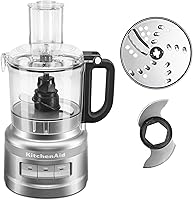
KitchenAid 7-Cup KFP0718: for everyday prep and tidy storage
Choose the KitchenAid if assembly and keeping parts together are high priorities. Its twist-free, one-click bowl assembly and latched lid provide a different setup from a twist-lock design.
The blades and discs store inside the bowl, helping keep the working parts in one place. High, Low and Pulse controls let you choose between steady operation and short bursts.
KitchenAid describes a cleaning method using warm water and 1–2 drops of dish soap in the leak-resistant bowl. Follow its instructions, then inspect and clean any areas that still hold food.
The included multipurpose blade and reversible medium slicing/shredding disc cover everyday preparation. Choose it for those clear functions rather than assuming a larger accessory bundle is necessary.
Skip it if large batch cooking is your main purpose or you need several slicing thicknesses. A convenient assembly won't remove the need to divide recipes that exceed its working limits.
Cuisinart Mini Food Processor 3-Cup: for herbs and small sauces
Choose the Mini if small amounts are the whole point. Its chop and grind buttons change the direction of the reversible blade to handle different preparations.
This is a blade-based chopper, not a substitute for a processor with cutting discs. Grinding hard cheese makes small particles; it doesn't produce the same result as shredding it through a disc.
The machine weighs 2.2 lb and measures 5 in deep, 7 in wide and 9.25 in high. Those dimensions make it worth considering when storage and frequent lifting drive the decision.
The bowl and lid are dishwasher safe, and the base wipes clean with a damp cloth. Keep blade care separate and follow its instructions for safe handling.
Skip it for sliced vegetables, shredded cheese or large recipes. Cuisinart also advises against grinding beans in this model, so don't treat the grind button as permission for every hard ingredient.
How do you set up and use a food processor?
Fit the correct attachment while the processor is unplugged, prepare the food, then work in suitable batches. Good setup prevents many problems blamed on motor strength.
Read the assembly instructions before the first use and wash the removable parts as directed. Check how the bowl, lid and pusher must sit for the machine to operate.
Prepare ingredients before switching on
Place the base on a dry, stable counter and keep the cord clear of the working area. Leave room beside it for a cutting board and a bowl to receive finished food.
Remove pits, bones and other unsuitable hard pieces. Cut ingredients into similar-sized chunks for chopping, or into pieces that fit the feed tube for disc work.
Uneven starting pieces encourage uneven results. A large carrot chunk can remain coarse while smaller onion pieces become too fine.
Match your technique to the attachment
For chopping, begin with a modest load and short pulses. Check the texture between bursts instead of committing to a long run at the start.
For slicing and shredding, install the disc in the correct direction and use the pusher. Stop before the collected food crowds the underside of the disc.
For dips, stop and scrape when ingredients collect on the bowl walls. Unplug the machine before scraping near the blade or adjusting its contents.
Use the manual's liquid limits even when a bowl looks spacious. Don't process hot ingredients unless the instructions allow it; cool cooked foods first when required.
Our food processor use guide walks through the basic tasks in more detail.
Which mistakes cause uneven food or extra work?
The most common mistakes are overfilling, mismatched ingredient sizes and running too long. Correct those before assuming you need a larger or more powerful machine.
Overfilling the bowl
Food needs room to move toward and away from the blade. A packed bowl can leave large pieces above a finely chopped layer.
Divide the load and combine the finished batches afterward. With discs, empty the bowl before food builds up against the cutting surface.
Using continuous power for a coarse result
A long run can turn chopped vegetables into a wet mixture before you notice. Use pulses when you want distinct pieces, then stop slightly early to inspect.
Separate ingredients when they need different treatment. Firm vegetables and soft tomatoes don't need the same processing time for a chunky salsa.
Choosing the wrong attachment
A chopping blade won't create even cucumber rounds. A shredding disc won't make a smooth dip, and a grind function doesn't replace a slicing attachment.
Decide the texture first, then choose the tool. If the machine lacks that tool, use a knife or grater rather than forcing the wrong attachment to do the job.
Forcing food or repeatedly restarting a stalled machine
Stop if food jams or the motor struggles. Switch off, unplug and follow the manual before reducing the load or clearing the obstruction.
Don't push harder through the feed tube or keep restarting without checking the cause. Reduce oversized pieces and observe the machine's duty and rest limits.
Processing dough longer than needed
Dough changes as it mixes, and continued processing can warm it or work it beyond the recipe's needs. Watch the mixture rather than relying only on elapsed time.
Use a recipe suited to your processor and stop at its stated stage. More motor time isn't a reliable cure for dough that needs a different ingredient balance.
When is a mini chopper enough?
A mini chopper is enough when you mainly want small amounts chopped or blended, rather than slices, shreds or large batches. It can keep routine prep from requiring a full-size bowl.
Good reasons to choose one include frequent herb mixtures, small dressings, crumbs and modest portions of chopped vegetables. The important detail is how much goes into the bowl at once.
A mini can also complement a larger processor if tiny mixtures don't reach the larger blade well. Buy the second machine only when those small jobs occur often enough to justify it.
Choose a full-size processor when discs are central to your cooking. Making slaw or slicing vegetables is a different need from finely chopping a few ingredients.
For more help separating these roles, read our comparison of a food chopper vs food processor.
Food processor vs blender: which one do you need?
Choose a food processor for solid-food prep and a blender when drinks and flowing liquid blends dominate. Decide around your most frequent recipes rather than the overlap between the two.
A processor's wide bowl gives you access to chopped food and thick mixtures. Cutting discs add slicing and shredding jobs that a standard blender doesn't cover.
A blender's pitcher suits liquids moving around a blade. Smoothies and other pourable blends usually point toward a blender first.
Dips and sauces can fall between the two. A chunky salsa needs different handling from a smooth, pourable sauce, so the recipe name alone doesn't settle the choice.
Neither appliance should be assumed safe for hot liquids. Check temperature guidance, lid instructions and fill limits before adding cooked ingredients.
See our full food processor vs blender comparison for examples of where each appliance fits.
Which food processor should you choose?
Choose the Cuisinart 14-Cup for larger prep sessions, Ninja for preset programs and a separate dough blade, KitchenAid for everyday prep with in-bowl storage, or the Cuisinart Mini for small chopping jobs.
Before ordering, check your most-used recipe, measure the storage spot and confirm the attachment that makes your preferred cut. If one of those doesn't fit, extra functions won't make the food processor the right choice.
For a quick shortlist, use our best food processors guide. To settle capacity first, use the food processor size guide, then finish with the guide to choosing a food processor.
Frequently asked questions
What size food processor do I need?
Choose a food processor for your usual batch, leaving room for ingredients to move. A mini suits herbs and small sauces, a mid-size bowl suits everyday meals, and a larger bowl suits batch prep.
Check separate limits for liquids and dough because the bowl's total capacity does not apply to every task.
What can a food processor do?
A food processor can chop, mix and puree with its main blade, then slice or shred with the right discs. Some models also support dough.
Match the attachments to your recipes, and remember that a slicing disc makes slices while a chopping blade makes irregular pieces, not uniform cubes.
Is a food processor the same as a blender?
A food processor is usually the better choice for chopping solid foods, slicing vegetables and shredding cheese. A blender is usually better for drinks and flowing liquid blends.
Both can make some sauces and purees, but the right choice depends on texture, batch size and the appliance's fill limits.
Do food processor parts go in the dishwasher?
Some removable food processor parts can go in the dishwasher, but check the manual for each piece and its rack placement. Keep the motor base out of water.
Remove food from seams and blade hubs before washing, then let all parts dry fully before putting the processor away.
How do you choose a food processor?
Start with the recipes you make most, then choose a bowl and attachments that fit those jobs. Compare assembly, pulse control, storage space and cleaning needs before buying.
Treat watts as one detail rather than a performance ranking, and check recipe limits if dough or thick mixtures are priorities.