How Do You Use a Food Processor?
Here's how to use a food processor: fit the right attachment, secure the bowl and lid, and pulse for chopping or run continuously for purees. Follow the manual's loading limits, and turn it off, unplug it, and wait for all movement to stop before changing parts or clearing food.
On this page (10 sections)
- How do you set up a food processor?
- Which attachment should you use?
- How should you load ingredients?
- Should you pulse or run continuously?
- Which processor suits larger meal prep?
- Which processor suits cooks who want presets?
- Which processor suits small prep jobs?
- What common mistakes spoil the results?
- How do you clean a food processor after using it?
- How should you choose a food processor for your kitchen?
Here's how to use a food processor: fit the right attachment, secure the bowl and lid, and pulse for chopped pieces or run continuously for smooth mixtures. Follow your manual's assembly order and batch limits.
Evenly cut ingredients and room for food to move matter more than running the motor longer. Start with a simple chopping task so you can see how quickly the texture changes.
How do you set up a food processor?
Set the unplugged processor on a dry, level counter, then assemble the bowl, attachment, and lid in the order your manual shows. Wash and dry the removable parts before their first use.
Handle blades and discs by their designated hubs or grips. Check that the attachment is seated and the bowl and lid locks engage without force.
Load food at the stage your manual specifies, then fit the lid and pusher before connecting power. Keep the cord away from water, hot surfaces, and the counter edge.
If the motor won't start, unplug the machine and recheck the assembly. Never bypass a safety lock or hold a loose lid in place.
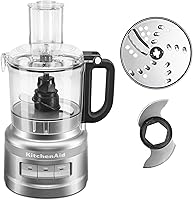
The food processor blade and disc guide helps you identify attachments before you assemble them.
Which attachment should you use?
Use the chopping blade for chopped ingredients and purees, a slicing disc for slices, and a shredding disc for shreds. Fit a dough attachment only when your machine's instructions call for one.
The chopping blade works inside the bowl, so processing time controls how finely it cuts. A disc cuts ingredients as they pass through the feed tube, rather than repeatedly chopping them in the bowl.
Don't expect a chopping blade to make even slices or a puree setting to make neat diced cubes. Choose the attachment for the shape you need.
Read what food processor blades and discs do for more detail, or explore what you can make in a food processor for meal ideas.
How should you load ingredients?
Cut food into similar-size pieces and stay within the manual's limit for that task. A bowl's stated capacity isn't a safe fill amount for every ingredient.
For chopping, spread pieces loosely around the blade rather than packing them down. Remove hard pits, bones, and anything else your manual excludes.
Use smaller batches if some pieces remain large while others turn mushy. Adding more processing time won't fix a crowded bowl.
Liquids and dough often have separate limits. Never assume you can fill the bowl with soup just because the same volume of dry vegetables fits.
How do you use a food processor feed tube?
Guide food through the tube with the supplied pusher, keeping fingers and utensils outside the opening. Trim ingredients to fit rather than forcing them through.
Keep pressure steady and gentle when slicing or shredding. If food jams, switch off, unplug, and wait for all movement to stop before opening the machine and clearing it.
Where a model has a smaller feed opening or insert, use it as directed to support narrow ingredients. This helps keep them upright as they reach the disc.
Should you pulse or run continuously?
Pulse for coarse textures; run continuously for smooth mixtures. Short bursts let you check chopped onions, breadcrumbs, or salsa before they become too fine.
Release the pulse control between bursts and look at the pieces. If food collects on the sides, switch off, unplug, and wait for the blade to stop before scraping with a spatula.
For hummus or another puree, use steady processing as the recipe directs. Add liquid gradually when called for, rather than flooding the bowl to make ingredients move.
Presets can simplify the control choice, but you still need the right attachment and batch size. Stop when the food reaches the texture your recipe needs.
Which processor suits larger meal prep?
The Cuisinart 14-Cup Food Processor suits cooks who prep several dishes or larger batches and want simple manual controls. Skip it if your main jobs are a handful of herbs or a small dressing.
Its on and off/pulse buttons let you control processing time directly. The extra-large feed tube has small and large pushers for different ingredient sizes.
The included slicing disc makes 4 mm slices, and the shredding disc produces medium shreds. Neither disc is adjustable, so choose another option if changing slice thickness is a priority.
At 18 pounds, this model makes more sense where you can leave it within easy reach. Consider where you'll store the discs as well as the machine.
For a meal-prep session, slice or shred firm produce before making a wet dip. Scrape out leftover pieces between tasks, and wash parts whenever ingredients or food safety require it.
Which processor suits cooks who want presets?
The Ninja Professional Plus BN601 suits cooks who want preset controls and a dough attachment in one machine. Skip it if you only need small amounts of chopped herbs or garlic.
It has a 9-cup bowl, 4 Auto-iQ programs, a chopping blade, and a reversible slicing and shredding disc. Those attachments cover vegetable prep, purees, and dough without needing a separate machine for each task.
Its motor is rated at 1000 peak watts. Don't use that number alone to rank it against another processor, since peak power doesn't guarantee working capacity or finished texture.
How do you use a food processor for dough?
Use the attachment, recipe quantity, and run time approved for your machine. Bowl capacity doesn't tell you how much dough it can knead.
Measure ingredients before starting and stop if the motor strains or the dough climbs the blade. Avoid running longer simply because the dough hasn't formed as expected.
The Ninja includes a dedicated dough blade and dough program. Read how to knead dough in a food processor before choosing a recipe or scaling a batch.
Which processor suits small prep jobs?
The Cuisinart Mini Food Processor 3-Cup suits small sauces, herbs, and modest amounts of chopped vegetables. Skip it if you need disc-cut slices, shredded vegetables, or large meal-prep batches.
Its reversible blade uses separate chop and grind buttons. Cuisinart advises against grinding beans in this model, so don't treat the grind control as permission to process every hard ingredient.
The machine measures 5 inches deep, 7 inches wide, and 9.25 inches high. That makes it worth considering when counter space and storage height limit your choices.
A small bowl helps keep modest quantities near the blade, but don't pack it tightly. For a spoonful of garlic or a few leaves, a knife may still mean less cleanup.
What common mistakes spoil the results?
Overfilling, uneven pieces, and running too long cause many disappointing results. Correct the loading or control choice before adding more processing time.
- Uneven chopping: Cut large pieces down first, leave room around the blade, and pulse.
- Watery salsa: Stop while the vegetables still have distinct pieces, and drain wet ingredients when the recipe calls for it.
- Pasty herbs: Dry washed herbs well and use brief bursts.
- Poor slices: Support ingredients in the feed tube and guide them with the pusher.
- Leaking liquid: Reduce the batch to the manual's liquid limit.
- Motor strain: Stop and check the quantity and ingredient suitability rather than pushing through.
Don't pour boiling soup into a processor. Follow its temperature limits and let hot ingredients cool as directed before processing.
How do you clean a food processor after using it?
Unplug the machine and wait for all movement to stop before taking it apart. Remove food soon after use so it doesn't dry inside the lid or around attachment fittings.
Handle sharp parts by their grips and wash them where you can see them. Don't leave a blade hidden beneath soapy water.
The Cuisinart full-size model has dishwasher-safe parts, and the Ninja's removable parts are dishwasher safe. The Mini's bowl and lid can go in the dishwasher; wipe its motor base with a damp cloth.
Follow each manual's rack and cycle directions, and never immerse a motor base. Our guide to dishwasher-safe food processor parts explains what to check.
Dry parts before storage and protect cutting edges from loose utensils. Use our food processor cleaning guide for the full care routine.
How should you choose a food processor for your kitchen?
Choose by your usual batch and required cuts, then check storage space and cleanup. An occasional large recipe shouldn't automatically decide the size you use every day.
Pick the Cuisinart full-size model for larger prep sessions and manual control. Choose the Ninja for presets and an included dough blade, or the Mini for small chopping jobs without slicing and shredding discs.
Our food processor buying guide covers the wider category. Use how to choose a food processor to compare capacity, controls, and attachments before ordering.
Once you've learned how to use a food processor, choose one task and repeat it with a consistent batch size. If you're still unsure which bowl fits your meals, read what size food processor you need.
Frequently asked questions
How do you use a food processor for the first time?
Start by reading the manual and washing the removable parts as directed. With the machine unplugged on a dry, level counter, fit the bowl and attachment, load evenly cut ingredients, and secure the lid in the required order; plug it in and begin with short pulses for a chopping task.
Should you pulse or run a food processor continuously?
Pulse when you want chopped pieces or a coarse texture, and run continuously when a recipe needs a smooth puree. Check progress often, since extra processing can turn chopped vegetables into paste; a preset program still needs the correct attachment, suitable ingredients, and a batch within the manual's limits.
How full should a food processor be?
Stay within the manual's limit for the ingredient and leave room for food to move. A bowl's stated cup capacity isn't its working limit for every task; liquids and dough can have lower limits, so split the batch if ingredients pack tightly or stop circulating around the blade.
Can you put your hand in a food processor?
Keep your hands out of the feed tube and never reach into a bowl connected to power. Switch off, unplug, and wait for all movement to stop before opening it; use a spatula to clear food and handle blades or discs only by their designated grips, away from cutting edges.