Can You Knead Dough in a Food Processor?
Yes, a food processor can knead bread and pizza dough when the machine supports it. Use the recommended blade and dough batch limit, then stop at the recipe's texture cue.
On this page (8 sections)
- What makes a food processor suitable for dough?
- Which of these food processors should you choose for dough?
- How do you knead dough in a food processor?
- How do you avoid overworking food processor dough?
- Which doughs work well in a food processor?
- When is a stand mixer or hand kneading a better choice?
- How do you clean the processor after kneading?
- Which method should you choose for dough?
Yes, you can make food processor dough for bread and pizza when your machine supports kneading and the batch fits its dough limit. A processor also mixes pie pastry, but pastry needs short mixing rather than the kneading used for bread.
The best reason to choose this method is convenience: one appliance can handle dough and other meal prep. For frequent large bread batches, a suitable stand mixer or hand kneading may fit your routine better.
What makes a food processor suitable for dough?
Dough capacity and the recommended blade matter more than bowl size or wattage alone. A roomy bowl still needs space for dough to move, and dense dough puts a different load on the motor than chopped vegetables.
Before buying, check the manual's maximum flour amount or dough weight against your usual recipe. Don't assume a processor can knead a bowl filled to its full cup capacity.
Also check the allowed run time and any required pauses. A machine that suits an occasional pizza recipe may be inconvenient for several batches in a row.
Choose around your other cooking tasks, too. Our guide to how to choose a food processor explains which controls and attachments matter beyond dough.
Which food processor blade kneads dough?
Use the blade specified for your machine and recipe. Some processors use a dedicated dough blade, while others allow a metal chopping/mixing blade.
Don't buy a machine solely because it includes a plastic dough attachment. Recipe compatibility and batch limits still decide what you can make.
Slicing and shredding discs have no role in kneading. Our guide to food processor blades and discs explains how the attachments differ.
Which of these food processors should you choose for dough?
Choose the Ninja for preset controls, the Cuisinart for simple manual operation, or the KitchenAid for accessory storage and adjustable slicing. Their different prep features help decide which earns space in your kitchen.
None should be chosen on bowl capacity alone. Confirm that your regular dough recipe fits before using the other features as tie-breakers.
Ninja PrecisionPro BZ601: for cooks who prefer presets
The Ninja suits cooks who want a dough preset and a dedicated attachment, plus tools for everyday vegetable prep. Its Auto-iQ controls offer a starting point for people who prefer preset programs to managing every pulse.
It has a 9-cup bowl, manual speed settings, and a reversible slicing/shredding disc. That combination makes sense for occasional dough alongside chopping, pureeing, and preparing toppings.
Skip it if your usual recipe exceeds its dough limit or you mainly want a machine for repeated bread batches. A preset doesn't remove the need to watch the dough or follow recipe texture cues.
Cuisinart 14-Cup Food Processor: for cooks who want manual control
The Cuisinart suits cooks who prefer on and off/pulse buttons and want a processor for broader meal prep. Its controls let you manage short bursts without choosing a program.
It includes a stainless steel chopping/mixing blade rather than a separate dough blade among the supplied accessories. Use Cuisinart's instructions to confirm the blade and method for your recipe.
Its 18-pound weight favors a regular counter spot. Skip it if frequent lifting would discourage use, or if you want adjustable slicing thickness, since its slicing and shredding discs are fixed.
KitchenAid 13-Cup KFP1318: for cooks who want organized accessories
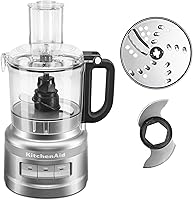
The KitchenAid suits cooks who want dough tools and slicing options stored together. Its in-bowl caddy holds the blades and discs, which helps keep attachments from spreading across a drawer.
The 13-cup bowl uses a twist-free, one-click assembly with a latched lid. An externally adjustable slicing disc also suits cooks who prepare vegetables as well as dough.
Check clearance before choosing it: the machine is 17.44 inches tall. Skip it if your storage space cannot accommodate that height, and remember to remove the caddy before food prep.
How do you knead dough in a food processor?
Measure carefully, assemble the machine correctly, and follow a processor-specific recipe. Ingredient order and liquid temperature can differ from a recipe written for hand kneading.
- Check the batch. Compare the recipe's flour amount or dough weight with your appliance's limit.
- Set up before adding food. Seat the bowl and recommended blade, then secure the lid as instructed.
- Measure the ingredients. Weigh flour when the recipe gives weights, since packed measuring cups can add too much.
- Add ingredients in the stated order. Pour liquid through the feed tube only when directed, using the pusher as instructed.
- Check at the recipe's intervals. Stop and unplug before opening the bowl to scrape or handle dough.
- Finish at the texture cue. Transfer the dough for its required rest or rise rather than leaving it around the blade.
Start on a stable, dry counter with space around the appliance. See how to use a food processor for the basic setup sequence.
Don't scale a recipe up simply because the bowl looks partly empty. If splitting a batch, divide all ingredients in the same proportions.
How do you avoid overworking food processor dough?
Stop at the recipe's texture cue, and watch for warmth as well as shape. Bread dough often needs smoothness and elasticity, but a gathered ball alone doesn't prove kneading is complete.
Processor blades work quickly and can warm dough through friction. Use the recipe's liquid temperature rather than automatically adding warm water, especially when adapting from another mixing method.
If the dough becomes noticeably warm, stop and follow the recipe's cooling or rest guidance. More processing won't solve every texture problem.
Avoid these common mistakes:
- Adding flour too soon. Tacky dough may be correct, and flour continues absorbing water during a rest.
- Running longer to force a clean bowl. Some doughs remain sticky even when properly mixed.
- Pouring in extra water at once. Check measurements first, then make only small adjustments if the recipe allows them.
- Continuing through strain or movement. Stop if the motor labors, the blade stalls, or the machine shifts.
Unplug before checking a stalled batch. Follow the manual's recovery instructions rather than repeatedly restarting against a stiff lump.
Which doughs work well in a food processor?
Processor-specific bread and pizza recipes are sensible starting points; pie pastry needs a different method. Match the mixing goal to the dough instead of using the same program for everything.
Bread and pizza dough need gluten development for structure and stretch. After mixing, their rest and rise stages still matter, so don't try to replace those stages with extra kneading.
Pie pastry usually needs limited gluten development and cold fat kept in small pieces. Use brief pulses and stop at the recipe's crumb or clumping cue rather than working it into a smooth bread-style ball.
Follow how to make pie dough in a food processor for that method. For other tasks that could justify buying a processor, see what you can make in a food processor.
When is a stand mixer or hand kneading a better choice?
Choose another method when the batch or kneading schedule exceeds your processor's limits. A stand mixer with a suitable dough hook and capacity can suit frequent bread making, while hand kneading avoids buying another appliance.
Hand kneading also makes it easier to feel changes in elasticity and tackiness. Very wet doughs may use folds and rests, so follow their recipe rather than forcing them through a processor routine.
If dough is your main reason for buying, compare complete recipes against appliance limits first. Our guide to what size food processor you need helps separate general prep capacity from your actual batch needs.
How do you clean the processor after kneading?
Unplug the processor and remove dough residue promptly, before it dries around the blade hub and lid. Keep your fingers away from cutting edges and use a brush for tight spaces.
Follow the manual's removal order, since dough can cling around the blade. Don't reach under it or pry dried dough away with a metal tool.
Wash removable parts according to their care instructions, and wipe the motor base rather than immersing it. Dry parts fully before putting attachments into an in-bowl storage caddy.
See how to clean a food processor for the full routine. Check food processor parts and dishwasher safety before assuming every attachment belongs in the dishwasher.
Which method should you choose for dough?
Choose food processor dough for compatible recipes that fit your machine and your cooking routine. Pick the Ninja for preset-led prep, the Cuisinart for manual controls, or the KitchenAid for organized accessories and adjustable slicing.
If bread is your main task and you regularly make several batches, compare a suitable stand mixer or hand kneading before committing. If vegetable prep is equally important, start with the complete food processor buying guide.
For pastry, use the dedicated food processor pie dough method. Before your first batch, mark the appliance's dough limit and the recipe's stopping cue so both are easy to find.
Frequently asked questions
Can a food processor knead bread dough?
Yes, a food processor can knead bread dough if the machine supports it and the recipe fits its dough capacity. Use the recommended blade and setting, and judge progress by the recipe's texture cues.
A dough ball can form before the dough has developed enough elasticity.
Which blade should I use to knead dough in a food processor?
Use the blade your appliance manual recommends for that dough, which may be a dedicated dough blade or a metal multipurpose blade. Match it to a compatible recipe rather than choosing by appearance.
Slicing and shredding discs cannot knead dough and should stay out of the bowl.
How long should dough be kneaded in a food processor?
There is no single kneading time for every food processor dough recipe. Follow a processor-specific recipe within the machine's operating limits, checking texture at the stated intervals.
Stop once the dough reaches the required smoothness and elasticity, and pause sooner if the dough becomes warm or the motor strains.
Can I knead pizza dough in a food processor?
Yes, pizza dough can be mixed and kneaded in a suitable food processor. Start with a processor-specific recipe and keep the flour amount within the machine's dough limit.
After kneading, follow the recipe's rest and rise schedule rather than trying to make tight dough stretch by processing it longer.