Can a Food Processor Shred Cheese?
Yes, a food processor can shred cheese with a shredding disc. Use cold, firm cheese, cut it to fit the feed tube, and guide it through with the pusher.
On this page (8 sections)
- Can a food processor shred cheese with any blade?
- How do you shred cheese in a food processor?
- How do you prevent sticky cheese and uneven shreds?
- Which food processors include a shredding disc?
- How should you choose a processor mainly for cheese?
- Is a food processor worth using instead of a box grater?
- How do you clean a food processor after shredding cheese?
- Which option should you choose to shred cheese?
Yes, a food processor can shred cheese when it has a shredding disc. Start with cold, firm cheese, cut it to fit the feed tube, and guide it through with the pusher.
It's useful for pizza night, casseroles, or meal prep that calls for several cups of cheese. For a small garnish, a hand grater often takes less time once you include assembly and washing.
The key buying choice is the attachment, followed by how much food you usually prepare. A large bowl alone doesn't mean a processor can make shreds.
Can a food processor shred cheese with any blade?
You need a shredding disc for strands of cheese. Its raised cutting openings shave cheese as it passes through, while the shreds collect in the bowl below.
The S-shaped chopping blade cuts pieces repeatedly inside the bowl. It can make chopped cheese or crumbs, but it won't produce the same strands.
A slicing disc makes slices rather than shreds, even though both attachments sit near the top of the bowl. Our guide to food processor blades and discs explains how to tell them apart.
Before buying, confirm that a shredding disc comes with the exact model. A small food chopper with only a bowl blade won't do this job.
Which cheeses can a food processor shred well?
Cold, firm and semi-firm cheeses are the easiest starting point. Cheddar, Monterey Jack, Colby, and low-moisture mozzarella hold their shape well enough to pass across a shredding disc.
Fresh mozzarella, cream cheese, and soft Brie aren't good choices for distinct shreds. Tear, crumble, spread, or cut them as the recipe needs instead.
Very hard aged cheese needs more care because it can crumble or resist feeding. Follow the manual's guidance, remove hard rind, and stop if the cheese won't pass through with light pressure.
How do you shred cheese in a food processor?
Assemble the shredding disc, then feed cold cheese through with steady, light pressure. Your manual determines the correct disc position, speed, and operating limits.
- Keep the cheese refrigerated until you're ready to use it.
- Remove packaging, wax, and any rind you don't plan to eat.
- Cut pieces narrow enough to slide freely into the feed tube.
- With the machine unplugged, fit the disc and lock the bowl and lid as directed.
- Start the processor at the recommended setting and feed cheese with the supplied pusher.
- Stop before shreds pile up against the underside of the disc.
Aim for pieces that fit the tube without wedging tightly. Awkward wedges can tip or catch, while pieces that are too wide invite you to push harder than needed.
Keep fingers and utensils out of the feed tube. Wait for all movement to stop and unplug the machine before opening it, clearing a blockage, or removing a leftover piece.
For assembly basics, follow how to use a food processor. Start with a small amount of cheese so you can check the cut before preparing the whole block.
How do you prevent sticky cheese and uneven shreds?
Keep the cheese firm, avoid heavy pressure, and empty the bowl before it crowds the disc. These habits address the most common causes of smearing and clumping.
What should you do if cheese smears?
Stop and chill the remaining cheese if it becomes soft or leaves a thick coating on the disc. A brief stay in the freezer can firm a pliable block, but don't freeze it solid.
Check it often rather than relying on one fixed chilling time. Cheese type, block size, and starting temperature all affect how quickly it firms.
Why are the shreds short or uneven?
The way a piece meets the disc affects strand length. A piece resting on a narrow edge may make shorter shreds than one held securely against a broader face.
Use the appropriate pusher to keep it steady without forcing it. A small unshredded end piece can remain above the disc; remove it safely and cut it by hand rather than chasing every scrap.
What if the processor slows or cheese stops feeding?
Stop the machine instead of pressing harder. Once it's unplugged, check for a packed bowl, a wedged piece, or buildup on the disc.
Don't add oil or water to make cheese feed more easily. Adjust the cheese's firmness and size, and follow the machine's operating limits.
Which food processors include a shredding disc?
All 3 processors below include an attachment for shredding cheese. Choose among them by your usual batch size, storage space, and the other prep jobs you want to handle.
Nominal bowl capacity isn't a recommended cheese batch size. Loose shreds take up space quickly, so watch their level beneath the disc.
Who should choose the Cuisinart 14-Cup Food Processor?
Choose the Cuisinart 14-Cup for family cooking and larger meal-prep sessions. Its medium shredding disc suits everyday cheese shreds, and the extra-large feed tube gives you room to load larger pieces that fit safely.
The 720-watt processor also includes a chopping/mixing blade and a 4mm slicing disc. Those attachments make it a practical choice if cheese is one step in a larger recipe with vegetables, dips, or dough.
Its slicing and shredding cuts aren't adjustable. Skip it if your main goal is switching between fine and coarse cheese shreds with the supplied equipment.
At 18 pounds, it also needs a sensible storage plan. It suits a cook who can leave it accessible better than someone who must lift it from a deep cupboard for every small task.
Who should choose the Cuisinart 11-Cup Food Processor?
Choose the Cuisinart 11-Cup for routine meals that also involve slicing and chopping. It includes a separate shredding disc, 2 slicing discs, and a chopping/mixing blade.
Two pusher sizes help you guide ingredients through its large feed tube. This is a useful middle choice if you want a processor for cheese, vegetables, and sauces without choosing the largest bowl here.
Don't assume the smaller bowl means a light machine: it weighs 16.9 pounds. Skip it if easy lifting is your main requirement, or if you'll only grate a little cheese a few times a month.
The choice between the Cuisinarts should follow your full recipes. A larger bowl helps with bulk prep, but it doesn't remove the need to stop and empty accumulated shreds.
Who should choose the KitchenAid 7-Cup KFP0718?
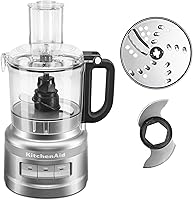
Choose the KitchenAid for smaller prep jobs and easier lifting. It weighs 6.6 pounds and stores its blades and discs inside the bowl, which helps keep the accessories together.
Its reversible medium slicing/shredding disc needs the shredding side positioned correctly. High, Low, and Pulse controls give you operating choices, though the manual should guide the setting for cheese.
The one-click bowl assembly and latched lid suit cooks who value simple setup. The included multi-purpose blade covers chopping and pureeing beyond cheese prep.
Skip it if you regularly prepare large amounts and want fewer bowl-emptying breaks. Also check vertical clearance: a smaller bowl doesn't guarantee that a processor will fit beneath your cabinets.
How should you choose a processor mainly for cheese?
Prioritize the included disc, manageable weight, and useful capacity over motor wattage alone. Power doesn't tell you the shred size or how much assembly you'll want to do for dinner.
Check these points before choosing:
- Shred size: A medium disc is useful for many meals, but it won't replace every face of a box grater.
- Batch size: Plan around your typical recipe rather than the largest meal you might ever cook.
- Storage: Measure the shelf and counter space, including room to remove the lid and use the pusher.
- Other jobs: Slicing vegetables, making dips, or preparing dough gives the machine more reasons to earn its space.
Our guide to choosing a food processor explains how capacity, controls, and attachments fit together. For the broader category, start with the food processor buying guide.
Is a food processor worth using instead of a box grater?
Use the processor for several cups of cheese or when it's already out for meal prep. Use a box grater for a small topping or when you need a cut your processor's disc doesn't offer.
The processor reduces repeated hand-grating effort, but you'll still cut the block, assemble the parts, and wash them afterward. Those steps matter more for a single serving than for a tray of enchiladas.
If you're buying a machine only for occasional cheese, a hand grater is usually the more practical choice. See what you can make in a food processor to judge whether its other jobs match your cooking.
How do you clean a food processor after shredding cheese?
Clean the removable parts soon after use so cheese doesn't dry into the disc openings. Unplug the machine before taking it apart, and handle the disc by its designated hub or safe handling points.
Remove loose cheese, then wash the parts according to the manual. A soft brush can reach around cutting openings without putting your fingers against sharp edges.
Dishwasher-safe parts still need the correct rack position and cycle. Check whether food processor parts are dishwasher safe before loading them.
Wipe the motor base with a damp cloth rather than immersing it. Dry the removable parts before storing them, and keep sharp attachments secured.
Which option should you choose to shred cheese?
A food processor can shred cheese well when the disc and batch size match your needs. Choose the Cuisinart 14-Cup for larger meal prep, the Cuisinart 11-Cup for routine cooking with several attachments, or the KitchenAid for smaller batches and easier lifting.
Keep a hand grater for quick garnishes and cuts the supplied disc can't make. Before your first batch, review how to clean a food processor so cleanup is as straightforward as the shredding.
Frequently asked questions
Can a food processor shred a block of cheese?
Yes, a food processor with a shredding disc can turn a block of firm cheese into shreds. Cut the block into pieces that fit freely in the feed tube, then use the pusher to guide them down.
Stop and unplug the machine before opening it or emptying the bowl.
Should cheese be cold before shredding?
Yes, cold cheese holds its shape better against the shredding disc. Keep it refrigerated until you're ready to prep, especially with cheddar or low-moisture mozzarella.
If the block bends or smears, chill it longer before continuing.
Avoid freezing it solid, and follow your processor's instructions for suitable foods.
Can I shred mozzarella in a food processor?
Yes, choose cold, low-moisture mozzarella if you want separate shreds for pizza or casseroles. Fresh mozzarella is wetter and softer, so it tends to smear or break apart.
Drain and tear fresh mozzarella instead when the recipe allows, rather than trying to force it through a shredding disc.
Can I use the chopping blade to shred cheese?
No, a chopping blade makes pieces or crumbs rather than long shreds. Use the shredding disc for strands that you can scatter over tacos, pizza, or a casserole.
Some recipes call for finely chopped hard cheese, but that's a different task and should follow your processor's food and blade instructions.