Cuisinart Custom 14 Food Processor Review: Worth It? (November 2026)
The Cuisinart Custom 14 suits cooks who regularly prep large batches and prefer simple manual controls. Choose another model if you need adjustable slicing, preset programs or a processor you'll often move out of storage.
On this page (9 sections)
- What does the Cuisinart Custom 14 include?
- Who will get the most use from the large bowl?
- Will it fit where you plan to use it?
- Are fixed slicing and shredding discs enough?
- How should you set it up and control texture?
- Which common mistakes should you avoid?
- How much cleanup does it need?
- Which alternative should you choose instead?
- Should you buy the Cuisinart Custom 14?
The Cuisinart Custom 14 is a strong choice for regular batch cooking if you want simple controls and the main attachments for chopping, slicing and shredding. Skip it if adjustable slice thickness or an easy-to-move appliance matters more than bowl capacity.
Its appeal is practical: prep ingredients for several meals, make a batch of dip, or shred cheese without dividing every job into many small portions. The best reason to buy it is a recurring kitchen task, not the hope that a larger appliance will create a new cooking habit.
What does the Cuisinart Custom 14 include?
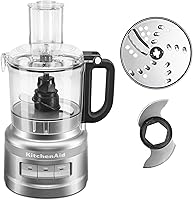
The Custom 14 includes a 4mm slicing disc, a medium shredding disc and a chopping/mixing blade, plus a detachable disc stem and recipe book. Its extra-large feed tube assembly uses small and large pushers.
Cuisinart 14-Cup Food Processor: Best for batch cooks

- 14-cup bowl
- 720-watt motor
- 4mm slicing disc
- Medium shredding disc
- Chopping/mixing blade
Choose it for regular batches of chopped vegetables, shredded cheese, dips and dough. Simple manual controls suit cooks who want to judge texture as they go.
Pros
- Large bowl for batch prep
- Small and large feed tube pushers
- Dishwasher-safe removable parts
- Cuisinart provides a limited 3-year unit warranty and full 5-year motor warranty
Cons
- Included slicing and shredding discs aren't adjustable
- 18 lb weight makes frequent moves less appealing
The DFP-14BCNY pairs a 14-cup bowl with a 720-watt motor. Its controls are limited to on and off/pulse, which keeps the choice simple: run continuously for a smoother mixture or use short bursts for more control over chopped food.
The blade handles jobs such as chopping vegetables, mixing dips and making purees. The discs handle food fed through the chute; our food processor blade and disc guide explains which attachment to choose for each task.
Cuisinart also supports dough preparation with this model, but the included attachment is a chopping/mixing blade rather than a separate dough blade. Follow the model's recipe limits instead of assuming every bread or pizza recipe will fit.
Cuisinart backs the unit with a limited 3-year warranty and the motor with a full 5-year warranty. Read the coverage and service terms before buying, especially if warranty support is part of your decision.
Who will get the most use from the large bowl?
Cooks who prepare several meals at once have the clearest reason to choose this capacity. Think of shredding vegetables for several lunches, chopping ingredients for a large sauce, or making dip for a gathering.
Count the tasks you repeat in a normal week. If several involve enough food to require repeated batches in a smaller processor, the larger bowl has a useful role.
Household size alone is a poor guide. A person who cooks ahead for the freezer may need more capacity than a family that prepares one small side dish at a time.
When the Cuisinart Custom 14 is too much machine
Small, occasional prep jobs don't make the best case for this model. If you mainly mince a little garlic, chop a handful of herbs or prepare a single serving, you'll still have a full-size bowl and blade to clean.
Very small quantities can also need more scraping in a large work bowl because ingredients spread away from the blade. Choose around your usual recipe size, rather than the largest meal you make once a year.
The Cuisinart 11-cup vs 14-cup size guide can help if you're between those bowl sizes. Remember that a smaller stated capacity doesn't automatically mean a much lighter machine or a better fit under your cabinets.
Will it fit where you plan to use it?
Measure the working space as well as the storage space before buying. The Custom 14 measures 11 in deep, 7.9 in wide and 14.8 in high, and weighs 18 lb.
Leave clearance to lift the pusher, feed ingredients and take off the lid. A machine that fits beneath a cabinet when idle may still need to slide forward during use.
The weight makes a permanent counter spot worth considering. If you must lift it from a low cupboard for every onion, the effort may discourage the short jobs you expected it to handle.
Plan a place for the sharp attachments, too. Store them where you can identify and grasp each piece without reaching blindly into a drawer.
Are fixed slicing and shredding discs enough?
The fixed discs suit cooks who are happy with one standard slice thickness and one shred size. They are less suitable if your recipes regularly switch between delicate slices and thick-cut vegetables.
The slicing disc makes 4mm slices, while the shredding disc makes medium shreds. Neither adjusts, so changing feed pressure isn't a substitute for choosing a different cutting thickness.
For many everyday jobs, that simple setup is enough. Shredded vegetables for slaw and sliced ingredients for cooked dishes don't always require several thickness settings.
If you want to change cuts often, put that need ahead of a small difference in bowl capacity. The Cuisinart and KitchenAid comparison is a useful next step for weighing their different attachment options.
Don't choose the Custom 14 expecting a dicing grid. Its included tools chop, slice and shred; uniform cubes require a different attachment or knife work.
How should you set it up and control texture?
Start with the correct attachment, evenly sized ingredients and short pulses for chopping. Read the assembly steps in the manual before first use, and unplug the machine whenever you fit or remove a blade or disc.
Wash and dry the removable parts before preparing food. Set the base on a dry, level surface, then secure the bowl and lid as directed without forcing parts that won't align.
For chopping, cut large ingredients into similar-size pieces before loading the bowl. Mixing a large carrot chunk with tiny pieces of onion makes it harder to reach an even result.
Pulse, stop and look at the texture. Continuous processing is useful for a smooth dip, but it can turn vegetables intended for a chunky salsa into a much finer mixture.
Scrape the bowl only after switching off, unplugging and waiting for the blade to stop. Use a spatula rather than your fingers, and keep your hand away from the cutting edge.
For disc work, trim ingredients so they fit the feed tube and use the correct pusher. Guide food with steady pressure rather than forcing it, and never put utensils or fingers into the chute.
Our guide to using a food processor covers the basic sequence if this will be your first full-size machine.
Which common mistakes should you avoid?
Overfilling and processing for too long are the easiest mistakes to prevent. Leave room for food to move, and check progress before adding more time.
Treat the bowl's stated capacity as its size, not a promise that every recipe can fill it to the rim. Liquids, dry ingredients and dough behave differently, so follow the manual's limits for each job.
Don't assume a processor can replace a blender for every liquid task. Cool cooked ingredients before processing, follow temperature guidance, and work within the liquid fill limit to reduce spills.
Keep dough batches within the recipe limits for this model. If dough gathers into a heavy mass or the machine strains, stop rather than trying to push through with a longer run.
A processor can bring dough together quickly, so extra running time isn't always helpful. Our food processor dough guide explains how to plan the task and avoid overworking it.
For cheese, use a firm block that fits the chute and keep it chilled until prep time. Very soft cheese can smear instead of forming distinct shreds.
How much cleanup does it need?
Expect to clean the bowl, lid, pusher and whichever attachment you use after each job. Dishwasher-safe removable parts make that easier, but even a short chopping task creates several pieces to wash.
Empty the bowl promptly so food doesn't dry around the blade hub or inside the feed tube. Separate the detachable disc stem and other removable pieces according to the manual so trapped food is easier to reach.
Keep the motor base out of water and wipe it with a damp cloth. Don't leave sharp blades hidden beneath cloudy dishwater, where someone could reach in without seeing them.
Follow the manual for dishwasher placement and care of each part. Our food processor dishwasher safety guide explains why dishwasher-safe care still requires attention to heat, positioning and sharp edges.
Dry the parts before storing them and check the feed tube for leftover food. For a tiny prep task, decide whether the time saved cutting is worth the cleanup before assembling the machine.
Which alternative should you choose instead?
Choose an alternative when it solves a specific problem with the Custom 14: controls, batch size or slicing flexibility. Each model below makes a different trade-off.
| Model | Bowl capacity | Main reason to choose it |
|---|---|---|
| Cuisinart 14-Cup Food Processor | 14 cups | Large batches with simple manual controls |
| Ninja Professional Plus BN601 | 9 cups | Preset programs for common tasks |
| Cuisinart 11-Cup Food Processor | 11 cups | Moderate batches with separate slicing discs |
| KitchenAid 13-Cup KFP1318 | 13 cups | Adjustable slicing and accessory storage |
Ninja Professional Plus BN601: for cooks who want presets
Choose the Ninja if you prefer selecting a task program rather than controlling every run with on and pulse buttons. It includes a separate dough blade and a reversible slicing and shredding disc.
Its 1000-peak-watt figure uses a peak measure, so don't use the larger number alone to rank it above the Cuisinart. Bowl size, controls and attachments give you a clearer basis for choosing.
Skip it if your main frustration is splitting large recipes into batches. Presets also don't remove the need to inspect food and stop when it reaches the texture you want.
Cuisinart Pro Custom 11: for moderate batch sizes
Choose the Pro Custom 11 if its bowl better matches your regular recipes and you want 2 slicing discs alongside a shredding disc and chopping/mixing blade. It keeps a manual, single-speed approach.
Skip it if you're choosing a smaller bowl mainly to avoid lifting a heavy appliance. At 16.9 lb, it still needs a practical storage and working spot.
It also doesn't solve the need for program controls. Its strongest reason to buy is a better capacity match, with a choice of separate slicing discs.
KitchenAid 13-Cup KFP1318: for changing slice thickness
Choose the KitchenAid if varied slice thickness is central to your cooking. Its externally adjustable slicing disc lets you change thickness, and its storage caddy keeps the accessories together inside the bowl.
The twist-free bowl assembly and latched lid are also worth considering if you prefer that setup. A separate dough blade and reversible shredding disc are included.
Skip it if your counter has tight overhead clearance: it stands 17.44 in high. Also allow time to remove stored attachments before using the bowl.
For more choices within the brand, see our best Cuisinart food processor guide.
Should you buy the Cuisinart Custom 14?
Buy the Cuisinart Custom 14 if you can name regular batch-prep jobs it will take over and have a convenient place to use it. Accept its fixed cuts before ordering, rather than hoping the included discs will cover every slicing style.
Choose the Pro Custom 11 for more moderate recipes, the Ninja for task presets, or the KitchenAid for frequent changes in slice thickness. Your usual workload should settle the choice before motor numbers or extra features do.
Before buying, write down your 3 most common prep jobs and measure the spot where the machine will work. If you're still unsure which features those jobs need, use our food processor buying guide to narrow the decision.
Frequently asked questions
What comes with the Cuisinart Custom 14?
The Cuisinart Custom 14 includes a 4mm stainless steel slicing disc, a medium shredding disc and a stainless steel chopping/mixing blade. You also get a detachable disc stem, small and large feed tube pushers, and a recipe book.
These attachments cover chopping, mixing, slicing and shredding.
Can you adjust the Cuisinart Custom 14 slicing thickness?
No, the included slicing and shredding discs aren't adjustable. They make 4mm slices and medium shreds, so choose this model only if those cuts fit your cooking.
The KitchenAid 13-Cup KFP1318 is the alternative here for changing slice thickness with an external adjustment.
Are the Cuisinart Custom 14 parts dishwasher safe?
Yes, its removable processing parts are dishwasher safe, including the slicing disc, shredding disc and chopping/mixing blade. Follow the manual for placement and part-specific care.
Unplug the appliance before taking it apart, keep the motor base out of water, and handle blades by their safe gripping areas.
How large is the Cuisinart Custom 14?
The Custom 14 has a 14-cup bowl and measures 11 in deep, 7.9 in wide and 14.8 in high. It weighs 18 lb.
Measure both its storage spot and working space, allowing extra room above the feed tube and enough space to remove the bowl.