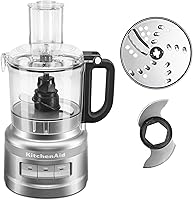
4 Best Food Processors with a Dicing Kit (November 2026)
The best food processors with dicing kits include the Breville Paradice 9 for small kitchens, the Breville Paradice 16 for batch cooks, and the Anatole 6-in-1 Electric Dicer for varied vegetable prep.
On this page (9 sections)
- Which food processor with a dicing kit fits your prep?
- How these dicing machines were compared
- Compare bowl capacity, cube size and attachments
- What matters when choosing a food processor with a dicing kit?
- How to set up a dicing kit for useful results
- Common mistakes that waste the benefit of a dicing kit
- How to keep a dicing kit clean and ready
- When is a dicing machine worth the extra cleanup?
- Final picks for food processors with a dicing kit
The Breville Paradice 9 is the best food processor with a dicing kit for most home kitchens because it combines dicing with everyday processing tools and onboard storage. Choose the Paradice 16 for bigger prep sessions, or an Anatole machine when vegetable cutting is the main job.
The useful distinction is how you'll cook after buying it. Someone making soup, slaw and dough needs a different setup from someone repeatedly dicing firm vegetables into a receiving container.
Start with our best food processors guide for a wider look at multipurpose machines. Our guide to what food processor blades and discs do explains how dicing tools differ from slicing and shredding parts.
Our picks at a glance
-
1

-
2

-
3

- 4
 Check it
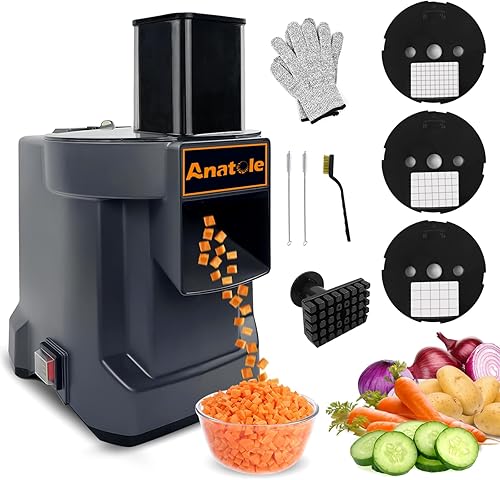
Anatole 3-Blade Electric Dicer
Best for frequent firm-vegetable prep
Which food processor with a dicing kit fits your prep?
Choose a Breville for broader kitchen work and an Anatole for focused vegetable preparation. Within those groups, decide whether you need more batch room, more cut sizes or more types of cuts.
The product sections below explain who should buy each machine and who should skip it. Pay particular attention to food suitability, since a dicing grid can't make soft produce hold its shape.
Breville Paradice 9: Best for small kitchens
- 9-cup bowl
- 0.5-inch dicing kit
- 4.7-inch feed chute
- Storage caddy inside bowl
Choose this multipurpose processor for everyday meals when you want its dicing kit and other attachments stored together inside the bowl.
Pros
- Dicing kit is included
- Onboard caddy keeps attachments together
- Includes slicing, shredding, chopping and dough tools
Cons
- Only one dicing size
- Smaller bowl means more emptying during large prep sessions
The Breville Paradice 9 suits cooks who want diced vegetables as part of a normal meal, rather than a long production session. Its 9-cup bowl and 0.5-inch dicing kit fit everyday prep when that single cut size matches your recipes.
The 4.7-inch feed chute gives room for different ingredient shapes, though produce still needs to fit properly. An adjustable slicer, reversible shredder, S-blade and dough blade let the same appliance handle other stages of a meal.
Its strongest small-kitchen feature is the storage caddy inside the bowl. Keeping the kit and other attachments together gives you a clear place to return sharp parts after washing.
Buy it if you regularly move between diced soup vegetables, sliced ingredients and chopped mixtures. Skip it if you need a fine dice for some dishes and large chunks for others, or often stop mid-recipe to empty a smaller bowl.
Breville Paradice 16: Best for batch cooks
- 16-cup bowl
- 8 mm, 12 mm and 16 mm dicing attachments
- 5.5-inch feed chute
- Attachment storage container
The better fit for cooks who prepare several meals together and want different dice sizes without giving up other food processor tasks.
Pros
- Three dicing sizes for different recipes
- Large bowl for batch preparation
- Includes mini bowl, French fries disk and dough blade
Cons
- Large bowl may be unnecessary for small meals
- Separate attachment container needs storage space
The Breville Paradice 16 is the better choice for cooks who prepare several meals in one session. Its 16-cup bowl and 8 mm, 12 mm and 16 mm dicing attachments give you more batch room and more control over piece size.
The feed chute offers openings from 1.7 to 5.5 inches, so you can choose an opening that supports the ingredient. The kit slices before pushing food through the dicing grid.
Other tools include an adjustable slicer, reversible shredder, French fries disk, S-blade and dough blade. A mini blade and bowl provide another option for smaller processing jobs.
Buy it if different recipes genuinely call for different dice sizes and you'll use its wider tool set. Skip it if most meals involve only a few vegetables, or you lack a convenient home for the separate attachment storage container.
The extra accessories are useful only when they're easy to reach. Plan their shelf space alongside the machine's counter space.
Anatole 6-in-1 Electric Dicer: Best for varied vegetable prep
- Three dicing grids with fixed 8 mm thickness
- Adjustable slicing thickness
- Shredding and crinkle-cut blades
- Two food inlets
A dedicated vegetable cutter for cooks who want several cut styles and direct discharge into a receiving container.
Pros
- Dices, slices, shreds and makes crinkle cuts
- Side inlet accepts long ingredients
- Includes grid-cleaning tools and brushes
Cons
- Not recommended for soft, juicy vegetables such as tomatoes
- Grid width changes, but dicing thickness stays fixed
The Anatole 6-in-1 Electric Dicer suits cooks who want a dedicated station for several vegetable cuts. It combines dicing, adjustable slicing, shredding and crinkle-cutting, with direct discharge into a receiving container.
Its top square inlet accepts ingredients such as potatoes, onions and peppers. The angled side inlet provides another route for long ingredients such as cucumbers and carrots.
The three dicing grids measure 3/8 inch, 1/2 inch and 3/5 inch, but slice thickness stays at 8 mm. Changing grids therefore changes the shape of the pieces without necessarily producing equal-sided cubes.
Buy it for varied vegetable preparation when you don't need a processor's dough and bowl-based chopping tools. Skip it for tomato-heavy prep, since Anatole advises against soft, juicy vegetables.
The supplied pushers, grid-cleaning tools and brushes belong beside the machine during use and cleanup. The feed openings and discharge area also need clear working space, so plan more than the base's footprint.
Anatole 3-Blade Electric Dicer: Best for frequent firm-vegetable prep
- Three dicing sizes
- Stainless steel blades
- Food pusher and gloves
- Grid-cleaning tool and brushes
A focused choice for repeated batches of firm vegetables when you don't need slicing, shredding or dough tools.
Pros
- Three dicing blade sizes
- Direct-discharge design
- Includes a pusher, gloves and cleaning tools
Cons
- Not intended for soft food
- Conflicting care guidance requires part-by-part checks before dishwasher use
The Anatole 3-Blade Electric Dicer fits repeated batches of firm vegetables when dicing is the only cut you need. Its stainless steel blades offer 3/8-inch, 1/2-inch and 3/5-inch dicing sizes.
Suitable foods include potatoes, carrots, onions and cucumbers; soft food is excluded. The direct-discharge design suits a workflow where you cut into a receiving container and move prepared ingredients aside between batches.
Buy it if you already have other tools for slicing and shredding and want a focused dicer. Skip it if you're hoping one machine will also make chopped sauces, prepare dough or supply several vegetable cut styles.
Anatole describes continuous use for 20–30 minutes. Follow the manual's operating and cooling directions rather than treating that range as permission to run it without checking the load.
A grid-cleaning tool and three brushes are included. Because its care guidance conflicts on hand washing and dishwasher use, hand-wash removable cutting parts unless the manual clearly permits otherwise.
How these dicing machines were compared
We compared cut options, batch handling, included tools and storage needs against common home cooking routines. The Breville models lead for mixed kitchen tasks, while the Anatole models serve a narrower vegetable-prep role.
A machine doesn't become the better choice simply by including more blades. An unused attachment still takes storage space and adds another sharp part to organize.
We also separated bowl-based processing from direct-discharge cutting. Those designs change how you collect ingredients and keep batches moving, which matters more than comparing motor wattage across different machine types.
Compare bowl capacity, cube size and attachments
Compare the cuts you'll use and the way food leaves the machine before choosing by size alone. The table brings together the main differences without treating a dedicated dicer as a complete replacement for a food processor.
| Product | Best for | Bowl capacity | Dicing size | Feed chute | Our score |
|---|---|---|---|---|---|
| Breville Paradice 9 | small kitchens | 9 cups | 0.5 in | 4.7 in wide | 7.1 |
| Breville Paradice 16 | batch cooks | 16 cups | 8 mm, 12 mm and 16 mm | Up to 5.5 in | 6.8 |
| Anatole 6-in-1 Electric Dicer | varied vegetable prep | 3/8 in, 1/2 in and 3/5 in grids; 8 mm thickness | 6.6 | ||
| Anatole 3-Blade Electric Dicer | frequent firm-vegetable prep | 3/8 in, 1/2 in and 3/5 in blades | 6.5 |
A bowl collects ingredients inside the processor, while direct discharge requires space for a receiving container. Neither arrangement removes the need to stop safely when food catches or the collection area fills.
For broader kitchen tasks, our guide to what you can make in a food processor covers uses beyond dicing. Choose tools around those actual meals, rather than a long accessory count.
What matters when choosing a food processor with a dicing kit?
Choose by your recipes, your largest normal batch and your cleanup routine. The right machine should save work across the whole meal, including assembly and washing.
Before buying, name three dishes you'll use it for and how often you make them. That short list reveals whether you need regular diced vegetables, several cut sizes or a multipurpose processor.
Which dicing size should your food processor offer?
Match the dice to the finished dish, especially when appearance and cooking time matter. Smaller pieces suit finer mixtures; larger pieces work better when you want distinct chunks in a stew or roasted vegetable dish.
Uniform pieces of the same ingredient tend to cook more evenly. Different vegetables can still need different cooking times, so equal size doesn't mean everything should enter the pan together.
Check grid width and slice thickness when both measurements are given. A rectangular piece may be perfectly useful in soup, but it won't look like an equal-sided cube in a composed salad.
Don't expect the standard chopping blade to replace a dicing kit. It cuts pieces repeatedly as they move around the bowl, rather than guiding them through a measured grid.
Do you need a full processor or a dedicated dicer?
Buy a full processor if you need several kinds of preparation from one appliance. Buy a dedicated dicer if repeated vegetable cutting is the job you most want to shorten.
For example, soup prep might involve diced vegetables followed by a chopped garnish. A bowl-based processor can cover both kinds of work with the appropriate attachments, though each change still requires safe assembly.
A dedicated cutter makes more sense when prepared vegetables move straight into separate containers. Don't assume it can mix, knead or purée simply because its name includes “food processor.”
Our complete food processor buying guide explains the wider category if you're choosing your first machine. That helps establish which everyday tasks matter before adding a specialized kit.
How much capacity and storage do you need?
Choose capacity around the largest batch you make regularly, rather than the biggest meal you might cook once a year. Occasional bowl emptying can be a fair trade for easier everyday storage.
Bowl capacity isn't a promise that every ingredient can fill it to the rim. Follow the marked limits and the manual's directions for the specific food and attachment.
For a closer look at sizing, read our guide to choosing a food processor by cups, watts and discs. Also measure the space needed to remove the lid and use the pusher.
Give every grid, blade and cleaning tool a planned storage spot. If using the appliance requires unpacking several crowded shelves, you're less likely to reach for it during a busy meal.
Which ingredients suit a dicing grid?
Choose ingredients that are firm enough to pass through the cutting assembly without collapsing. Check the manual for food-specific limits, especially for cooked foods, soft fruit and dense produce.
Remove pits, hard seeds and other inedible parts before processing. Peel or trim as your recipe requires, then reduce anything too large for the feed opening.
Don't assume a machine suited to raw potatoes also accepts frozen chunks, bones or every hard food. The permitted ingredients and preparation steps matter more than how strong the motor sounds.
For delicate ingredients, a knife often gives more control. Keep soft tomatoes and other easily crushed foods separate from a firm-vegetable batch.
How to set up a dicing kit for useful results
Prepare the station before switching on the machine: organize ingredients, fit the correct assembly and place a receiving container where needed. A few minutes of setup prevents awkward stops with exposed cutting parts.
Read the assembly sequence for that exact model. Dicing parts may include a grid, cutting blade, drive pieces or other components that need to fit in a particular order.
With the appliance unplugged, check that each part is seated and the lid is secured as directed. Never bypass a safety lock or assume a nearly closed lid is ready for use.
Wash and trim the produce before bringing it to the machine. Cut oversized ingredients to fit the chute comfortably instead of trying to force them through.
Process a small first portion, then stop and inspect the pieces. This lets you confirm that the chosen cut suits the recipe before committing the whole batch.
Keep the receiving bowl or processor bowl within its fill limit. Clear the work area between ingredients so finished food doesn't crowd the controls or discharge opening.
For a fuller walkthrough of basic assembly and controls, see how to use a food processor. Use the machine's own manual for the exact dicing sequence.
Feed steadily without forcing the pusher
Use the supplied pusher with steady pressure that follows the manual's directions. Keep fingers, utensils and loose clothing away from the feed opening while the machine is connected to power.
Prepare pieces that sit securely in the appropriate chute opening. Poorly supported ingredients can tilt, leaving awkward end pieces or cuts that don't match the rest of the batch.
If food stops moving, switch off and unplug before investigating. Pressing harder can pack food into the grid instead of clearing the obstruction.
Separate ingredients by recipe and cooking stage
Collect ingredients separately when they'll enter the recipe at different times. Dicing carrots and onions to a similar size doesn't erase the difference in how they cook.
For meal prep, label containers by dish before starting. That keeps a large cutting session from turning into a mixed pile you must sort afterward.
Leave a knife and cutting board available for trimming and small leftovers. A dicing machine reduces repeated cuts, but it doesn't remove every bit of manual prep.
Common mistakes that waste the benefit of a dicing kit
The biggest mistakes are choosing the wrong cut, forcing unsuitable food and ignoring cleanup time. Avoid them by planning the whole preparation job before filling the chute.
Buying for an attachment you rarely need
A dicing kit earns its storage space through repeated use. If you only dice a single onion occasionally, setting up and washing a grid may take more effort than cutting it by hand.
Count realistic uses across an ordinary week. A regular soup, casserole or meal-prep routine is a stronger reason to buy than a one-time holiday menu.
Expecting every piece to be a perfect cube
A grid controls cuts, but it doesn't turn curved produce into square blocks without leftovers. Tapered ends and irregular outer pieces can remain different shapes.
Use suitable trimmings in stocks, sauces or chopped mixtures when appropriate. Don't repeatedly send tiny scraps through the chute unless the manual permits it.
Choosing a small dice for every recipe
Smaller isn't always better. Fine pieces may disappear into a long-cooked sauce, while a chunky dish needs pieces large enough to remain distinct.
Decide what the finished food should feel like before selecting the grid. That choice matters more than using the smallest available setting.
Leaving a packed grid until after dinner
Food trapped in small openings becomes harder to remove as it dries. Build grid clearing into the prep routine rather than leaving the assembly buried under other dishes.
You don't need to rush around sharp parts. Unplug, disassemble safely and use the correct cleaning tool before moving on.
How to keep a dicing kit clean and ready
Unplug the machine and clear trapped food promptly, then wash each part according to its own care directions. A dishwasher-safe bowl doesn't tell you how to clean a grid, blade or drive assembly.
Remove loose scraps with the supplied tool or an appropriate brush. Keep fingers away from cutting edges, and don't use a metal utensil to pry food out of the grid.
Wash sharp parts separately so they can't disappear beneath cloudy dishwater. Avoid leaving them loose in a sink where someone could reach in without seeing them.
The Paradice 9 bowl and lid are dishwasher safe, and Breville also identifies the Paradice 16 bowl as dishwasher safe. Check attachment instructions separately before adding cutting or drive parts to a dishwasher.
For uncertain parts, our guide to food processor dishwasher safety explains what to check. Never immerse the motor base; clean it according to the appliance manual.
Store the kit so the next setup is easy
Dry parts fully before returning them to their holders. Keep cutting edges protected and cleaning tools close enough that you won't substitute your fingers when a grid needs clearing.
Check grids and blades for damage before the next use. Stop using a damaged part and follow the brand's replacement guidance.
Store attachments in a consistent order so a missing component is obvious. Complete, organized storage saves time when the next recipe calls for a different cut.
When is a dicing machine worth the extra cleanup?
A dicing machine makes the most sense when repeated cutting outweighs assembly and washing. The advantage grows when several vegetables or several meals share the same cut.
Think about a pot of soup plus a second prepared dish, rather than one garnish. Grouping compatible tasks lets you use the kit for a meaningful batch before cleaning it.
A knife remains useful for tiny quantities and delicate food. You don't need to put every ingredient through the machine to get value from it.
For multipurpose models, count the other tools you'll actually use too. Regular slicing, shredding and chopping can justify counter space even when dicing isn't part of every meal.
Final picks for food processors with a dicing kit
Buy the Paradice 9 for everyday mixed prep, the Paradice 16 for larger cooking sessions, or an Anatole for focused vegetable work. Choose the Anatole 6-in-1 when you need several cut styles and the 3-Blade when firm-vegetable dicing is enough.
Before ordering a food processor with a dicing kit, choose the cut size your three most common recipes need and identify a storage spot for every sharp part. If either answer is unclear, resolve that before choosing a larger tool set.
For alternatives that may better match your everyday tasks, compare our best food processors roundup.
Our top 3 picks at a glance
-
1
-
2
-
3
Frequently asked questions
What should you look for in a food processor with a dicing kit?
Choose by cut size, batch size and the other jobs you need the machine to do. Check that the dicing kit is included, then plan storage for its sharp parts.
A larger bowl helps with batch cooking, but it doesn't remove the need to clear and wash the grid.
Can a food processor dice tomatoes?
Tomatoes need a machine that permits them and flesh firm enough to hold its shape. Anatole advises against soft, juicy vegetables such as tomatoes in its 6-in-1 dicer, and its 3-Blade model excludes soft food.
For other machines, follow the manual; use a knife for soft tomatoes.
What is the difference between a dicing kit and a vegetable dicer?
A dicing kit adds measured cuts to a multipurpose food processor, while a dedicated vegetable dicer centers on produce cutting. Choose the processor when you also need chopping, dough or other bowl-based tasks.
Choose a dedicated dicer when repeated vegetable batches are the main reason for buying.
Are food processor dicing attachments hard to clean?
Dicing grids need more attention than an open bowl because food can lodge in each opening. Unplug the machine, remove the assembly as directed and use its cleaning tool before scraps dry.
Check care instructions for every part; dishwasher-safe bowl guidance doesn't automatically cover the grid, gearbox or blades.