5 Best Vegetable Choppers (November 2026)
The best vegetable choppers include the Fullstar Pro Original Vegetable Chopper for batch dicing, the Mueller 10-in-1 Vegetable Chopper for varied meal prep, and the Vidalia Chop Wizard for small dicing jobs.
On this page (10 sections)
- How we chose these vegetable choppers
- Compare the best vegetable choppers
- The best vegetable choppers for different prep styles
- How to choose the best vegetable chopper for your meals
- How to set up a manual vegetable chopper
- How to get useful cuts from different vegetables
- How to clean and store a vegetable chopper
- Common vegetable chopper mistakes to avoid
- Vegetable chopper vs mini food processor
- Which best vegetable chopper fits your routine?
The Fullstar Pro Original Vegetable Chopper is the best vegetable chopper for most kitchens that regularly dice onions, peppers and other vegetables. Its roomy catch container and blade storage make it a practical choice for preparing several ingredients before cooking.
Choose Mueller if your meals call for several cut styles, Vidalia for small dicing jobs, or OXO for chopped mixtures. Yusshn suits cooks who want a drain basket alongside cutting attachments and accept hand washing.
A chopper earns its place when it shortens a whole prep job, including setup and cleanup. For a single garnish, your knife may still be the quicker tool.
For a broader look at small powered options, see our best mini food processors. If you're deciding between a manual chopper and a motorized appliance, compare them in food chopper vs food processor.
Our picks at a glance
-
1

-
2

-
3

- 4
 Check it
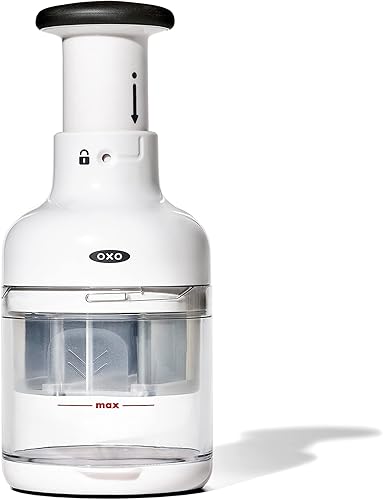
OXO Good Grips Vegetable Chopper
Best for herbs and vegetables - 5
 Check it
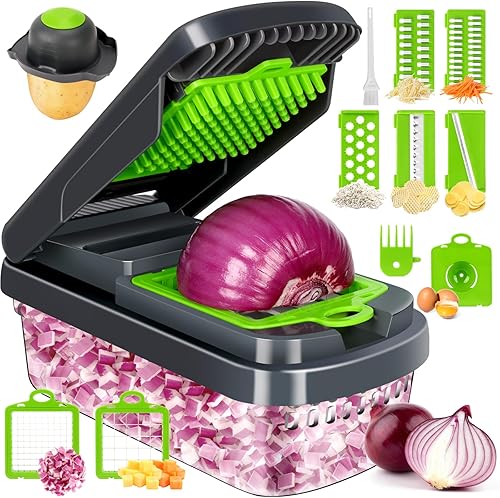
Yusshn 12-in-1 Vegetable Chopper
Best for rinse-and-prep routines
How we chose these vegetable choppers
We compared cutting action, useful attachments, collection space and cleanup to match each chopper to a clear cooking routine. The order favors practical vegetable prep, with fewer extra parts as an advantage when two tools cover the same job.
A grid dicer and a rotating-blade chopper solve different problems. The first helps repeat a cut size, while the second lets you work toward a coarse or finer chopped texture.
We also considered what happens before and after cutting: trimming produce, changing blades, transferring food and clearing trapped scraps. Those steps matter more than a promise about how quickly a blade moves.
Compare the best vegetable choppers
The best vegetable choppers differ most in how they cut and how you clean them. Choose your cutting style first, then use capacity and care requirements to narrow the options.
| Product | Best for | Capacity | Operation | Cleanup | Our score |
|---|---|---|---|---|---|
| Fullstar Pro Original Vegetable Chopper | batch dicing | 5 cups | Manual press | Top-rack dishwasher safe | 8.3 |
| Mueller 10-in-1 Vegetable Chopper | varied meal prep | Not specified | Manual | Dishwasher safe | 8.1 |
| Vidalia Chop Wizard | small dicing jobs | 2 cups | Manual press | Hand wash until care guidance is confirmed | 7.7 |
| OXO Good Grips Vegetable Chopper | herbs and vegetables | Not specified | Pump handle | Dishwasher safe | 7.6 |
| Yusshn 12-in-1 Vegetable Chopper | rinse-and-prep routines | Not specified | Manual | Hand wash only, below 140°F | 7.0 |
The best vegetable choppers for different prep styles
Fullstar is the strongest all-around choice for regular dicing, while the other picks serve more specific routines. Read each recommendation alongside its reasons to skip, especially if you're replacing a tool you already use.
Fullstar Pro Original Vegetable Chopper: Best for batch dicing
- 5-cup container
- Interchangeable blades
- Blades store inside container
- Top-rack dishwasher safe
Choose Fullstar for repeated vegetable dicing when you want fewer stops to empty the container. Its blades store inside, keeping the kit together between meals.
Pros
- Room for a larger prep batch
- Blades store inside the container
- Brush and scraper included
Cons
- Classic model lacks mandoline slicing features
- Firm ingredients still require manual pressure
Fullstar suits cooks who dice several vegetables for soup, chili, salads or meal prep. Its 5-cup container gives cut ingredients somewhere to collect without requiring a separate bowl beneath the cutting area.
The soft-grip handle and non-skid base are useful features for a tool you press downward. Still, dense vegetables need sensible sizing before they reach the grid, and a secure base doesn't remove the effort of cutting them.
This classic version covers dicing and spiralizing zucchini. Skip it if thin slices, shredded cabbage or grated ingredients are your main goal, because it lacks the mandoline and slicing features of other Fullstar versions.
The blades store inside the container, which helps keep the set together in a cabinet. Remove and arrange them carefully rather than reaching into the bowl without looking.
A brush and scraper help clear the grid before the parts go on the dishwasher's top rack. Fullstar is the best fit here if you want a repeatable dicing routine without organizing a large slicing kit.
Mueller 10-in-1 Vegetable Chopper: Best for varied meal prep
- Two dicing blades
- Six interchangeable slicing, julienne, grating and shredding blades
- Food holder
- Dishwasher safe
Mueller suits cooks who regularly switch between diced vegetables, slices and shredded ingredients. Buy it for the cuts you'll use, rather than the accessory count alone.
Pros
- Several cutting styles in one kit
- Food holder for small produce
- Dishwasher-safe parts
Cons
- Several inserts to organize
- Unnecessary attachments for dicing-only prep
Mueller suits cooks whose weekly meals require more than diced onions. Its 2 dicing blades and 6 other inserts cover slicing, julienne, grating and shredding, making it a better match for varied salad and side-dish prep.
Think about a meal with diced peppers, sliced cucumber and shredded cabbage. That mix gives several attachments a clear purpose, rather than leaving most of the kit unused.
The included food holder helps hold small produce during slicing. Use it as directed and stop when the remaining piece becomes too small to hold securely.
Mueller comes apart for dishwasher cleaning, but changing cuts still means handling and organizing inserts. Prep all ingredients that use one blade before switching to the next to reduce interruptions.
Choose it if you already use several cut styles each week and want them in one manual system. Skip it if you only want an onion dicer, or if loose accessories tend to disappear in your kitchen drawers.
Vidalia Chop Wizard: Best for small dicing jobs
- Two interchangeable blades
- 2-cup container
- Cleaning tool included
- Container doubles as measuring cup
Vidalia keeps small chopping and dicing jobs simple with two blade choices and a measuring container. Skip it if frequent bowl emptying would interrupt your meal prep.
Pros
- Simple two-blade setup
- Catch container doubles as measuring cup
- Cleaning tool included
Cons
- Small container for batch cooking
- Conflicting dishwasher and hand-wash guidance
Vidalia suits cooks who want basic chopping and dicing with only 2 blade choices. Its 2-cup container fits a small prep job better than a large pot of soup or several days of chopped vegetables.
The container doubles as a measuring cup, so you can check your amount before moving the ingredients into a recipe. Empty it when needed rather than trying to squeeze an entire batch beneath the lid.
This is a sensible choice if extra slicing and grating inserts would stay in the cabinet. Skip it if you regularly prepare several cups of produce and dislike stopping to transfer ingredients.
Vidalia's care guidance conflicts: dishwasher-safe claims appear alongside a hand-wash instruction. Hand wash until the instructions for your unit confirm otherwise, and use the included cleaning tool to remove trapped scraps.
The main reason to choose Vidalia is its focused job, not a long feature list. It gives a cook who wants diced vegetables fewer blade decisions to make before starting dinner.
OXO Good Grips Vegetable Chopper: Best for herbs and vegetables
- Rotating stainless steel blade
- Pump handle
- Measurement markings on catcher cup
- Dishwasher safe
OXO suits cooks who want chopped vegetables, herbs or nuts without changing grid inserts. Stop pumping when the pieces reach the texture your recipe needs.
Pros
- Chops vegetables, herbs and nuts
- Catcher cup has measurement markings
- Comes apart for cleaning
Cons
- Requires repeated pumping
- Not a substitute for slicing or grating inserts
OXO suits cooks who want chopped vegetables, herbs or nuts rather than a fixed grid cut. Its stainless steel blade rotates with each pump, letting you stop when the mixture reaches the texture your recipe needs.
That action fits chopped salsa ingredients, herbs for a sauce or nuts for baking. Begin with a few presses and inspect the food before continuing, since extra chopping can't restore pieces that have become too fine.
The catcher cup has measurement markings, and the chopper comes apart for dishwasher cleaning. Its knob gives you a different action from closing a lid over a dicing grid, though you still supply the force.
Choose OXO if a coarse or fine chop matters more than matching cubes. Skip it if your main goal is neatly diced salad vegetables, thin slices or shredded ingredients.
Keep wet ingredients and liquids out until the chopping step is complete unless the instructions allow them. This also makes it easier to judge the size of the solid ingredients before combining your recipe.
Yusshn 12-in-1 Vegetable Chopper: Best for rinse-and-prep routines
- Dicing, slicing, shredding and grating pieces
- Hand protector
- Container with drain basket
- Hand wash only
Yusshn combines several cutting options with a container and drain basket for rinsing and collecting produce. It suits cooks willing to wash the kit by hand after prep.
Pros
- Several cutting and grating options
- Hand protector and cleaning brush included
- Container includes a drain basket
Cons
- Cannot go in the dishwasher
- Hard or large ingredients need preliminary cutting
Yusshn suits cooks who want several cutting options and a drain basket in one prep kit. Its pieces cover dicing, slicing, shredding and grating, with a hand protector and cleaning brush included.
The basket is useful when rinsing and collecting produce are part of the same prep session. Drain ingredients well before cutting so extra water doesn't collect with your chopped vegetables.
Yusshn calls for preliminary cutting of hard or large ingredients. Plan to keep a knife and cutting board nearby, especially for dense roots or produce that won't sit flat on the cutting area.
Hand wash below 140°F and let the pieces dry before storage. Skip this kit if loading every used part into the dishwasher is central to your cleanup routine.
Choose it when the basket and attachments have clear jobs in your kitchen. If you mostly dice one ingredient at a time, you'll gain less from the extra pieces while still needing to store and care for them.
How to choose the best vegetable chopper for your meals
Choose the cut you need most often, then check the effort, batch size and storage that come with it. An attachment you use every week matters more than several you might use someday.
Start with the shape your recipe needs
A grid dicer is the better choice for repeated pieces in chopped salads, soup bases and vegetable fillings. A rotating-blade chopper suits mixtures where a coarse or fine texture matters more than cube shape.
A grid controls the cut across the ingredient, but it doesn't make every starting piece the same thickness. Thick slabs can produce longer pieces, so preliminary knife cuts still affect the result.
For slices, julienne strips or shreds, choose a tool with those specific inserts. Dicing alone won't replace the other cuts, even if you press the same food through twice.
Match the container to the whole recipe
Choose collection space for the vegetables you'll prepare together, rather than the number of people in your household. A meal for 2 can still require several ingredients, while a larger household may only need one chopped onion.
A bigger catch container means fewer transfers, but you may still want separate bowls for ingredients that enter the pan at different times. Mixing carrots and herbs during prep can create extra sorting later.
Treat the container as collection space, not a target you must fill. Empty it before food crowds the cutting area or interferes with the mechanism.
Check the action your hands must perform
Manual choppers need force, and grip comfort doesn't tell you how a dense vegetable will feel to cut. Consider whether you prefer repeated pumping or pressing a lid over prepared pieces.
If pressing causes discomfort or requires leaning your body weight onto the tool, stop and reduce the ingredient size. A motorized option may fit your routine better if supplying cutting force is the main problem you want to solve.
Plan storage before choosing more blades
Extra blades help only when you can find, fit and clean them without fuss. Decide where the assembled tool and its accessories will live before choosing a kit for its attachment count.
Leave room to handle inserts by their frames without reaching across exposed edges. A loose blade in a crowded utensil drawer makes both storage and retrieval harder.
If you're unsure whether a manual tool covers enough tasks, our food processor buying guide explains the broader appliance category. It can help you decide whether to reserve storage space for a chopper or a more versatile powered machine.
How to set up a manual vegetable chopper
Set the chopper on a clean, dry, stable counter, fit the correct blade and prepare produce to fit before cutting. A few careful setup steps prevent many jams and uneven results.
Assemble before adding food
Check that the blade insert sits fully in its frame and that the collection container is correctly attached. Keep food out of the mechanism while fitting or changing parts.
Make sure the lid or handle can move freely before loading produce. Don't press down on a partly seated insert to force it into position.
Peel, trim and create a flat surface
Remove peels, cores, pits, stems and other parts you wouldn't normally include in the recipe. Cut rounded ingredients into stable pieces that fit comfortably within the cutting area.
For grid dicing, use slabs of similar thickness when matching pieces matter. For a rotating chopper, begin with similarly sized chunks so one large piece doesn't need far more chopping than the rest.
Make a small first batch
Start with one manageable piece on a grid or a modest amount in a chopping cup. This lets you judge the needed force and finished cut before committing the whole batch.
Use the supplied holder or protector for the cutting tasks it covers. Keep fingers away from exposed edges during loading, assembly and cleanup, even when the cutting action itself keeps hands above the blade.
Transfer ingredients in cooking order
Prep foods that share a blade together, but keep separate containers for ingredients with different cooking times. This reduces attachment changes without turning every cut vegetable into one mixed pile.
For a soup base, collect firm vegetables separately from delicate greens or herbs. You'll be able to add each group when the recipe needs it instead of sorting through the catch container.
How to get useful cuts from different vegetables
Match your prep to the vegetable's firmness and shape rather than pushing every ingredient through in the same way. A chopper reduces repeated cutting, but it doesn't remove the need to trim and size food.
Onions and peppers
Peel onions, remove the root and cut pieces that sit securely on the grid. For peppers, remove the stem and seeds and divide the walls into manageable sections.
Use evenly thick starting pieces when you want similar dice. Curved ends and irregular scraps may be quicker to finish with a knife than to force into a perfect grid pattern.
Carrots and other firm roots
Cut dense roots into smaller sections before using a manual dicer. A narrow piece is easier to manage than a whole thick carrot placed across the cutting area.
If resistance rises sharply, stop rather than repeating harder presses. Remove the food safely, reduce its size and check that the blade is seated correctly.
Tomatoes and softer produce
Use firm produce when you want distinct diced pieces. Very ripe tomatoes and soft fruit can compress under pressure, so a knife may preserve their shape better.
For salsa, chop in short stages and check the texture before continuing. Add watery ingredients gradually when combining the finished mixture so you can control its consistency.
Herbs and nuts
A rotating chopping blade is a more suitable action for herbs and nuts than a vegetable dicing grid. OXO covers both, making it the clearest fit here for cooks who want those jobs alongside vegetable prep.
Dry herbs well before chopping to reduce clumping. Work in small batches and stop at the texture you need, especially when finely chopped ingredients could disappear into a sauce.
How to clean and store a vegetable chopper
Clear food promptly, follow the model's care instructions and dry every part before storage. Cleaning is easier before onion layers, herb pieces and vegetable fibers dry around the cutting edges.
Empty the container and remove larger scraps using the supplied cleaning tool or a suitable brush. Don't sweep your fingertips across a blade or reach between grid edges to pull out food.
Take the tool apart only as its instructions direct. Keep sharp pieces visible beside the sink rather than leaving them hidden under cloudy water or other dishes.
Dishwasher-safe parts still need space for water to reach their surfaces. Follow any rack limits, and don't assume one brand's care directions apply to another kit.
After washing, inspect the grid, pressure plate and attachment slots for trapped food. Let parts dry fully, then store sharp inserts where they won't scrape against other utensils or be grabbed by mistake.
If you're also caring for a powered prep appliance, our food processor cleaning guide covers its bowl, blade and motor-base routine. Keep those directions separate from the instructions for your manual chopper.
Common vegetable chopper mistakes to avoid
Oversized ingredients, excess force and too much food at once cause avoidable trouble with manual prep. Adjust the food and batch before assuming a harder push is the answer.
- Loading a whole vegetable that barely fits: trim it into stable sections with room around the cutting area.
- Expecting a grid to control every dimension: use even starting thicknesses if consistent pieces matter.
- Pumping without checking the texture: pause early, since another press may make a coarse mixture too fine.
- Letting the catch container overfill: transfer food before it blocks the next cut or crowds the mechanism.
- Using a slicing insert without its holder: follow the supplied instructions and stop before the remaining piece becomes unsafe to grip.
- Buying attachments without planning storage: choose the cuts you use often and give sharp inserts a secure home.
Also consider the time spent changing and washing parts. For a few slices of cucumber, getting out a full kit can add work instead of reducing it.
Vegetable chopper vs mini food processor
Choose a manual chopper for repeated dice or simple prep without a motor, and a mini food processor for powered chopping. The better choice depends on the finished texture and how much manual effort you want to supply.
A grid chopper is useful when you want recognizable pieces for a salad or filling. A rotating powered blade is useful when you want to chop a mixture further, though it requires attention to avoid going too fine.
If you want powered chopping instead of pressing or pumping, compare our best mini food processors. Consider the bowl size alongside the type of food you usually prepare.
A larger food processor can suit bigger batches and offer more tasks through its attachments. See our best food processors if you regularly prepare larger amounts or want an appliance for several kitchen jobs.
Which best vegetable chopper fits your routine?
Choose Fullstar if diced vegetables are a regular part of your cooking and you want the kit to store together. Before buying, name 3 meals you'll use it for and decide where it will live between them.
Pick Mueller if those meals need slices, shreds and dice; choose Vidalia if you want small, straightforward dicing jobs. OXO fits chopped herbs, nuts and vegetables, while Yusshn makes sense when its drain basket will be useful and hand washing fits your routine.
The best vegetable chopper should remove a repeated step from meals you already cook. If your main need is less physical effort or broader powered prep, use our food chopper and food processor comparison to make the choice.
Our top 3 picks at a glance
-
1
-
2
-
3
Frequently asked questions
What is the best vegetable chopper for most kitchens?
The Fullstar Pro Original Vegetable Chopper is the best vegetable chopper for most kitchens that regularly dice produce. Its roomy collection container and internal blade storage suit repeated prep, while Mueller makes more sense for varied cuts and OXO suits cooks who want a pump-operated chopping blade.
Are manual vegetable choppers worth using?
Manual vegetable choppers are worth using when you repeatedly prepare similar cuts for several servings. They still need assembly, preliminary knife work and cleaning, so consider the whole job rather than chopping alone.
For a few slices or a small garnish, a knife usually means fewer steps.
What is the difference between a vegetable chopper and a food processor?
The vegetable choppers here use manual pressure to cut ingredients, while a food processor uses a motor. Grid choppers suit repeated dice, and rotating choppers suit chopped mixtures.
A food processor offers powered prep and, with suitable attachments, can take on tasks beyond the cutting jobs these manual tools cover.
Can vegetable choppers go in the dishwasher?
Fullstar allows top-rack washing, and Mueller and OXO are dishwasher safe. Yusshn requires hand washing below 140°F, while Vidalia has conflicting care guidance.
Follow the instructions supplied with your exact model, hand wash Vidalia until its guidance is confirmed, and clear trapped food with a brush or cleaning tool.
Do you need to cut vegetables before using a chopper?
Yes, expect to peel, trim and cut produce into pieces that fit the cutting area before using a manual chopper. A grid controls width, while the thickness of your starting piece affects the final shape.
Reduce hard ingredients further if pressing requires strain, and never force an oversized piece through.


