9 Best Food Processors for Slicing Vegetables (November 2026)
The best food processors for slicing vegetables include the Ninja Professional XL Food Processor for slicing vegetables in bulk, the Ganiza Food Processors with 2 Bowls for keeping meat and vegetables apart, and the Ninja PrecisionPro Food Processor & Dough Mixer for medium kitchens.
On this page (7 sections)
- The best food processors for slicing vegetables
- How these food processors compare for slicing
- How we compared these food processors
- What should you check before buying a food processor for slicing?
- Which food processor is best for small kitchens?
- What else should you know before you buy?
- The best food processor for slicing vegetables: the verdict
The best food processor for slicing vegetables is the Ninja Professional XL Food Processor, because its 12-cup bowl and 3-part pusher feed whole produce through an extra-wide chute. For smaller kitchens the Ninja PrecisionPro does the same slicing job with a 9-cup bowl, and the Ganiza solves the meat-and-veg problem with two bowls.
Slicing is where most food processors either earn their counter space or get pushed to the back of a cabinet. A machine that only chops leaves you with a knife in your hand for carrots, cucumber and potatoes.
Most picks below have a dedicated slicing path, either a reversible disc or a fixed disc, so the machine does the cutting. The choppers are included for chopping-only jobs, since they have no slicing disc.
We compared them on the things that decide whether slicing is quick: the feed chute size, the bowl capacity, the motor and what's in the box. Our score weighs specs, features and buyer feedback against what you're shopping for.
The food processor buying guide covers the wider range if you also want chopping and dough work in one machine.
Our picks at a glance
-
1
 Best for slicing vegetables in bulk
Ninja Professional XL Food Processor
9.7/10 our score
See it on Amazon -
2
 Best for keeping meat and vegetables apart
Ganiza Food Processors with 2 Bowls
9.6/10 our score
See it on Amazon -
3
 Best for medium kitchens
Ninja PrecisionPro Food Processor & Dough Mixer
9.6/10 our score
See it on Amazon
- 4
 Check it
Cuisinart 14-Cup Food Processor
Best for big family batches - 5
 Check it
Cuisinart Mini Food Processor 3-Cup
Best for small vegetable jobs - 6
 Best for quick onion and herb prepCheck it
- 7
 Check it
BLACK+DECKER 8-Cup Food Processor
Best for simple slicing on a budget - 8
 Check it
Cuisinart 11-Cup Food Processor
Best for dedicated slicing discs - 9
 Check it
BLACK+DECKER 8-Cup Food Processor
Best for first-time food processor buyers
The best food processors for slicing vegetables
The Ninja Professional XL wins overall for volume slicing, and each other pick is the right choice for a more specific job. Choose by the size of your batches and the vegetables you cut most often.
Where a machine has no slicing disc, its job is chopping and mincing rather than rounds, and the write-up says so plainly.
Ninja Professional XL Food Processor: Best for slicing vegetables in bulk
- 1200-peak-watt motor
- 12-cup bowl
- XL feed chute with 3-part pusher
- Reversible shredding disc
A wide feed chute and a 12-cup bowl make short work of a full sheet-pan of vegetables. The 1200-peak-watt motor pushes through dense roots without stalling.
Pros
- Wide feed chute with 3-part pusher
- 12-cup bowl for family batches
- Dishwasher-safe bowl, lid, discs and blades
Cons
- Takes up real counter and cabinet space
- Built for volume rather than small jobs
The Ninja Professional XL suits anyone who preps a whole sheet-pan of vegetables at once. Its XL feed chute with a 3-part pusher takes large and small ingredients, so you spend less time halving carrots and potatoes before they go in.
The 1200-peak-watt motor is the strongest here. It's the spec that matters when slicing dense vegetables like beets and sweet potatoes, where a weak motor slows or stalls.
The reversible shredding disc also gives you coarse and fine shredding on the same machine.
Auto-iQ presets include a slice program, so the machine picks the speed for you rather than you holding a pulse button. That's a small thing that matters when your hands are full of produce.
The box adds a chopping blade and a dough blade, and the bowl, lid, discs and blades all go in the dishwasher.
The trade-off is footprint. The bowl takes real cabinet space and the machine is 12.3 lb.
Its full height is 17.5 inches, so measure cabinet clearance first. Choose it if you slice often and in quantity.
For smaller kitchens, the 9-cup Ninja next in line covers the same job with less bulk.
Ganiza Food Processors with 2 Bowls: Best for keeping meat and vegetables apart
- 8-cup glass bowl
- 8-cup stainless steel bowl
- 450-watt motor
- Two-speed S-blade
Two separate bowls let you prep meat in one and vegetables in the other without cross-contamination or a wash in between. The glass bowl is the one to reach for when you want to watch a chop come together.
Pros
- Two bowls in different materials
- Easy to keep raw meat and veg separate
- Removable blades for easy cleaning
Cons
- S-blade chops and minces rather than slices
- No wide feed chute for whole produce
The Ganiza suits a household that cooks meat and vegetables in the same session. Its 8-cup glass bowl and 8-cup stainless steel bowl let you prep raw chicken in one and cucumber or onion in the other without a wash in between.
The glass bowl is the one to use when you want to watch a blend come together. The steel bowl is the tougher one for meat and frozen fruit.
Both come with their own set of blades.
Its 450-watt motor and two-speed S-blade chop and mince rather than slice. That makes it a strong pick for salsa, guacamole and chopped salad, where you want small pieces rather than neat rounds.
If your goal is even cucumber slices, the Ninja models with a slicing disc are the better fit.
The auto-stop design cuts the blade when the motor lifts off, which matters in a house with children. It's also lighter than the big Ninja at 5 lb.
Pick it when bowl separation is the priority and slicing is a smaller part of the job. An overheating protection system stops the motor if it works too long, so give it a few minutes to cool before restarting.
Ninja PrecisionPro Food Processor & Dough Mixer: Best for medium kitchens
- 1000-peak-watt motor
- 9-cup bowl
- Reversible slicing/shredding disc
- Four Auto-iQ presets
The 9-cup bowl and reversible slicing/shredding disc handle most weeknight prep without the footprint of a 12-cup machine. Auto-iQ presets take the guesswork out of running the slice function.
Pros
- Slicing and shredding on one reversible disc
- 9-cup bowl suits smaller households
- Dough blade adds mixing range
Cons
- Smaller feed opening than the XL model
- Fewer discs than the Cuisinart models here
The Ninja PrecisionPro is the medium-kitchen answer. Its 9-cup bowl slices enough for a family meal without the counter depth of a 12-cup machine, and the reversible slicing/shredding disc handles both jobs without swapping parts.
The 1000-peak-watt motor is a step below the XL model but still strong enough for most everyday vegetables. Four Auto-iQ presets cover chopping, slicing, shredding and pureeing, so you don't have to learn the speed settings.
A manual speed option is there when you want to take over.
The large feed chute on this model takes whole produce, though the opening is smaller than the XL's. For a couple or a small family, that's rarely a problem.
For big-batch roasting trays, the extra capacity of the 12-cup model pays off.
It adds a dough blade for pizza and pastry and ships with a recipe guide, so it's a reasonable one-machine kitchen if you bake. Against the bigger Ninja, the PrecisionPro trades capacity for a smaller footprint.
Against the Ganiza, it wins on true slicing. Parts are BPA-free and dishwasher safe.
Cuisinart 14-Cup Food Processor: Best for big family batches
- 720-watt motor
- 14-cup bowl
- 4mm stainless slicing disc
- Medium shredding disc
A 14-cup work bowl takes the whole pile at once when you're prepping vegetables for a crowd. The 4mm slicing disc gives consistent, even slices for roasting and stir-fries.
Pros
- Largest bowl in this group
- Fixed 4mm slicing disc for even results
- Large feed tube with two pushers
Cons
- Slicing and shredding discs are not adjustable
- Heavy at 18 lb
The Cuisinart 14-Cup suits large households and anyone who preps vegetables for the week in one go. The 14-cup work bowl is the biggest here, so a full pile of onions or potatoes goes in without dividing the job.
Its 4mm stainless slicing disc gives consistent rounds for roasting and stir-fries. The large feed tube with two pushers lets you choose the opening for the vegetable in hand.
A medium shredding disc and a chopping/mixing blade round out the set.
Cuisinart states that the slicing and shredding discs are not adjustable. That means one slice thickness for everything, so thin cucumber and thick potato come out the same.
If you need thickness choices, the 11-cup Cuisinart further down has two slicing discs. The controls are just on and off/pulse, with no speed dial.
The 720-watt motor and 18 lb weight tell you this is a workhorse for volume rather than a quick small-job machine. The brushed stainless body has a 36-inch cord, and the set includes a recipe book.
It's the pick for big batches and the strongest non-Ninja option here. Cuisinart backs the unit with a limited 3-year warranty and the motor with 5 years.
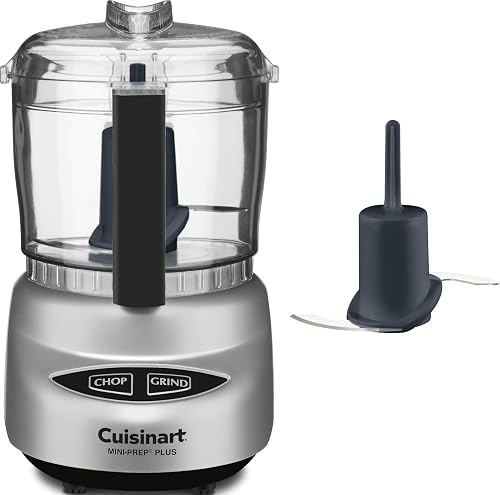
Cuisinart Mini Food Processor 3-Cup: Best for small vegetable jobs
- 250-watt motor
- 3-cup bowl
- Reversible SmartPower blade
- Push-button control
A compact 3-cup bowl is right for a handful of herbs or a single onion, not a whole tray of vegetables. The reversible blade chops on one side and grinds on the other.
Pros
- Small footprint for tight counters
- Reversible blade for chop and grind
- Dishwasher-safe bowl and lid
Cons
- No slicing disc for vegetable rounds
- Small batch size only
The Cuisinart Mini suits small vegetable jobs and tight counters. Its 3-cup bowl is right for a handful of herbs, a single onion or a small batch of salsa, not a tray of produce.
The 250-watt motor and patented reversible blade handle chopping and grinding in one bowl. Press chop to mince onion or herbs, or grind for hard cheese and nuts.
A spatula and recipe book come in the box.
It does not have a slicing disc, so it's a chopper rather than a slicer. That's the honest limit to know before you buy: for neat vegetable rounds, choose a full-size model with a disc.
For dicing onion and garlic fast, this is quicker to set up and wash than a big machine. The lid has two pinholes so you can stream oil into a dressing while the blade runs, which is handy for pesto and vinaigrette.
At 2.2 lb and 9.25 inches tall, it tucks into a cabinet or sits on the counter without crowding. Pick it as a second machine for small jobs, or as your only processor if you mostly chop.
For chopping specifically, our vegetable chopping processors roundup covers dedicated machines.
Hamilton Beach 3-Cup Chopper: Best for quick onion and herb prep
- 350-watt motor
- 3-cup bowl
- Stack and press lid
- Stainless steel blades
The stack-and-press lid skips twist-locking, so you press to chop and release to stop. That makes it fast for onions, garlic and herbs when a recipe needs them diced, not sliced.
Pros
- Press-to-chop lid with no twisting
- 350 watts for its size
- Dishwasher-safe bowl, lid and blades
Cons
- Chops and minces but doesn't slice
- Small bowl limits it to small jobs
The Hamilton Beach 3-Cup Chopper suits fast onion and herb prep. Its stack-and-press lid means you press to chop and release to stop, with no twist-locking, so it's ready in seconds.
The 350-watt motor is strong for a 3-cup machine. Stainless steel blades handle onions, carrots and nuts.
An oil dispenser on the lid lets you stream oil into dressings and dips while the blade runs.
It chops and minces, not slices. The small bowl limits it to small jobs like a single onion or a batch of salsa.
For anyone who cooks one meal at a time and wants less knife work on onions and garlic, that's enough. It's also light enough at 2.1 lb to pull out for one job and put away.
The hideaway cord keeps the counter tidy, and the bowl, lid and blades are dishwasher safe. Against the Cuisinart Mini, it's cheaper in feel but faster to load.
It's the smallest and lightest machine here at 2.1 lb. For a bigger small processor, see our small food processor picks.
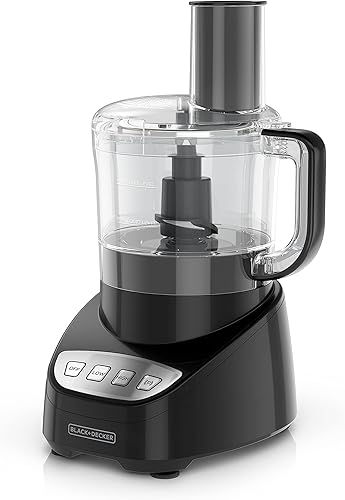
BLACK+DECKER 8-Cup Food Processor: Best for simple slicing on a budget
- 450-watt motor
- 8-cup bowl
- Reversible slice/shred disc
- Two speeds plus pulse
An 8-cup bowl and a reversible metal disc cover slicing and shredding without extra attachments. The lid doubles as the locking mechanism, so setup takes seconds.
Pros
- Reversible disc slices and shreds
- Easy-assembly lid lock
- Dishwasher-safe removable parts
Cons
- Lower power than the Ninja models
- Basic two-speed control set
This BLACK+DECKER 8-Cup suits simple slicing without paying for extra attachments. Its reversible metal slice/shred disc slices vegetables on one side and shreds cheese on the other.
The easy-assembly design sets the work bowl on the base and uses the lid as the lock, so setup is quick. Two speeds plus pulse give you basic control for soft and firm vegetables.
The 450-watt motor handles everyday produce.
It's a simpler machine than the Ninja models. Fewer speeds and one disc mean less flexibility, but also fewer parts to store.
For a first food processor or a second machine for a rental kitchen, that's a fair trade. The 8-cup bowl is roomy enough for salsa and hummus as well as a pile of sliced vegetables.
Against the other BLACK+DECKER here, this model has two speeds and the other has three. Pick this one for a lower-cost entry point.
Pick the three-speed model if the extra control matters to you. Both slice the same way.
All removable parts are dishwasher safe, so cleanup is short.
Cuisinart 11-Cup Food Processor: Best for dedicated slicing discs
- 11-cup bowl
- Two slicing discs
- Shredding disc
- Chopping/mixing blade
Two slicing discs give you a choice of thickness for different vegetables, from thin cucumber rounds to thicker potato slices. The 11-cup bowl sits between the compact and 14-cup machines.
Pros
- Two slicing discs for different thicknesses
- Large feed tube with two pushers
- Dishwasher-safe parts
Cons
- Fewer speeds than the Ninja models
- Heavy at 16.9 lb
The Cuisinart 11-Cup suits cooks who want a choice of slice thickness. It comes with two slicing discs and a shredding disc, so thin cucumber rounds and thicker potato slices are both on the table without buying extras.
The 11-cup bowl sits between the compact machines and the 14-cup model. A large feed tube with two pushers takes different vegetable sizes.
The chopping/mixing blade handles purees and sauces.
Against the 14-cup Cuisinart, this model wins on disc variety and loses on bowl size. Both are heavy machines at 16.9 and 18 lb.
If you slice a range of vegetables at different thicknesses, the two discs justify the choice. A spatula is included for scraping the bowl.
It's the pick for someone who slices more than they chop. If you mostly chop and only occasionally slice, the Ninja PrecisionPro covers both with less weight.
The dishwasher-safe parts make cleanup simple either way, and the cover with its large feed tube keeps operation mess-free.
BLACK+DECKER 8-Cup Food Processor: Best for first-time food processor buyers
- 450-watt motor
- 8-cup bowl
- Reversible slice/shred disc
- Three speeds plus pulse
This second BLACK+DECKER 8-cup model pairs a reversible slice/shred disc with three speeds and a pulse setting. It's a low-cost way to learn whether you'll use a processor often.
Pros
- Low, high and pulse controls
- Reversible disc for slicing and shredding
- Dishwasher-safe removable parts
Cons
- Same basic power as the other BLACK+DECKER
- One disc rather than a set
This BLACK+DECKER 8-Cup suits first-time buyers who want to try a food processor without a big spend. It pairs a reversible slice/shred disc with low, high and pulse controls for basic vegetable prep.
The 8-cup bowl holds a decent batch of salsa, hummus or sliced vegetables. The easy-assembly lid locks with a twist.
All removable parts are dishwasher safe.
Its 450-watt motor matches the other BLACK+DECKER here, and the three speeds add a little more control than the two-speed version. Against the Ninja models, it's less powerful and has fewer discs.
Against the Ganiza, it slices but doesn't separate meat and veg. The touchpad controls are flat and wipe clean, which helps with sticky dough or salsa splashes.
Pick it if you want to learn whether you'll use a processor before spending more. Pick the Ninja PrecisionPro if slicing is central to your cooking.
For nut butters and other thick blends, our nut butter processor guide is the better starting point.
How these food processors compare for slicing
The comparison table lines up the specs that decide slicing speed: bowl size, motor and disc type. Read down the capacity column first if you prep for a family, then check the disc column for the slice you want.
The weights and heights in the table also tell you whether the machine will fit your cabinet.
| Product | Best for | Capacity | Power | Discs | Our score |
|---|---|---|---|---|---|
| Ninja Professional XL Food Processor | slicing vegetables in bulk | 12 cups | 1200 peak watts | Reversible shredding disc | 9.7 |
| Ganiza Food Processors with 2 Bowls | keeping meat and vegetables apart | 8 cups | 450 watts | 9.6 | |
| Ninja PrecisionPro Food Processor & Dough Mixer | medium kitchens | 9 cups | 1000 peak watts | Reversible slicing/shredding disc | 9.6 |
| Cuisinart 14-Cup Food Processor | big family batches | 14 cups | 720 watts | 4mm slicing and medium shredding | 9.2 |
| Cuisinart Mini Food Processor 3-Cup | small vegetable jobs | 3 cups | 250 watts | 8.8 | |
| Hamilton Beach 3-Cup Chopper | quick onion and herb prep | 3 cups | 350 watts | 8.5 | |
| BLACK+DECKER 8-Cup Food Processor | simple slicing on a budget | 8 cups | 450 watts | 8.3 | |
| Cuisinart 11-Cup Food Processor | dedicated slicing discs | 11 cups | Two slicing and one shredding | 8.0 | |
| BLACK+DECKER 8-Cup Food Processor | first-time food processor buyers | 8 cups | 450 watts | 7.7 |
A fixed disc and a reversible disc behave differently in daily use. A fixed disc gives one even thickness for everything, which is ideal for roasting trays where you want the same cook time across the pan.
A set with two discs costs more but lets you switch between thin salad slices and thicker roasting slices. A reversible slice/shred disc covers slicing and shredding with one part, so it's the simplest to store.
How we compared these food processors
We compared the machines on the specs that affect slicing vegetables: the bowl capacity, the motor, the feed chute and the discs included. A wide feed chute and a dedicated slicing disc counted for more than extra features like dough blades.
We also weighed what comes in the box. A model with a reversible slice/shred disc covers two jobs with one part, while a set with two slicing discs offers thickness choice.
Bowl material and dishwasher-safe parts affected the ranking because cleanup decides how often you reach for the machine.
Finally, we matched each machine to the buyer it fits. A 3-cup chopper scores well for small jobs and poorly for a family roasting tray.
The scores reflect that fit, not just raw power. A machine with no slicing disc can't rank high for slicing vegetables however strong its motor, so the choppers sit lower here and are judged on what they actually do.
What should you check before buying a food processor for slicing?
Check the feed chute and the slicing disc first, because those two decide whether the machine actually slices the vegetables you cook. A wide chute saves knife work before the machine takes over.
Does the feed chute fit whole vegetables?
A wide feed chute takes whole carrots, potatoes and zucchini. The Ninja XL model has a 3-part pusher for different ingredient sizes, which means fewer vegetables need halving first.
A narrow chute means more prep before slicing starts. Measure the largest potato or carrot you cook with before you commit to a smaller model.
Is the slicing disc adjustable or fixed?
A fixed disc like the 4mm one on the Cuisinart 14-Cup gives one consistent thickness. An adjustable or multi-disc set like the 11-cup Cuisinart gives you choices.
Think about whether you want even slices for roasting or varied thicknesses for salads. Cuisinart notes that its 14-cup slicing and shredding discs are not adjustable, so read the disc list carefully.
How big should the bowl be?
Match the bowl to your batch size. A 3-cup bowl handles a single onion or herbs.
An 8-cup bowl covers a family side dish. A 12-cup or 14-cup bowl takes a whole tray of vegetables in one go.
Bigger bowls are heavier and take more cabinet space. The Ninja XL weighs 12.3 lb and the Cuisinart 14-Cup weighs 18 lb, so lifting the bowl to the sink matters too.
How much motor power do you need for slicing?
Slicing is lighter work than dough mixing, so a mid-range motor handles most vegetables. Dense roots like beets and sweet potatoes benefit from more power.
The 1200-peak-watt Ninja XL is the strongest here, and the 450-watt models are fine for everyday produce. A 250-watt mini chopper is meant for herbs and small jobs, not a tray of roots.
Which food processor is best for small kitchens?
A compact 8-cup or 9-cup machine is the best fit for a small kitchen, because it slices most vegetables without the footprint of a 12-cup or 14-cup model. The Ninja PrecisionPro's 9-cup bowl covers family meals.
Its base measures about 8 by 8 inches and stands 16 inches tall, so it needs less cabinet clearance than the XL.
When is a mini chopper enough?
A mini chopper like the Cuisinart Mini or the Hamilton Beach 3-Cup is enough when you mostly chop onions, garlic and herbs rather than slice. Both are small and light.
Neither has a slicing disc, so neat vegetable rounds still need a knife or a full-size machine. The Hamilton Beach lid's oil dispenser also makes it handy for emulsifying a dressing in the same bowl.
Can a small processor still slice well?
Yes, if it has a slicing disc. The BLACK+DECKER 8-cup models both slice with a reversible disc and fit on a small counter.
The limit is batch size, not slice quality. For a family tray of roasted vegetables, a bigger bowl saves time.
The Cuisinart Mini's reversible blade also chops and grinds for small jobs, so a mini can still cover more than onions.
What else should you know before you buy?
Think about cleanup and storage as well as slicing. A machine that's hard to wash or too heavy to lift gets used less, whatever its disc set.
The controls matter too: preset programs suit cooks who want one-touch results, while manual buttons and a pulse give more control over texture.
How do you clean a slicing disc?
Rinse the disc first, then hold it by the center hub and wash the rim away from your fingers. Most discs here are dishwasher safe.
A brush helps clear food from the slots without brushing across the blade. On the Cuisinart 14-Cup the disc stem detaches to make cleaning easier.
How much counter space does a full-size processor take?
The Ninja XL measures 8.7 by 10.7 by 17.5 inches and weighs 12.3 lb. The Cuisinart 14-Cup measures 11 by 7.9 by 14.8 inches and weighs 18 lb.
Measure your cabinet height before choosing a full-size machine. A 9-cup model like the PrecisionPro is shorter, so it fits under more cabinets.
Can you slice meat as well as vegetables?
Yes, on machines with a slicing disc. The Ninja PrecisionPro's reversible disc slices meats on one side and shreds cheese on the other.
Keep raw meat away from ready-to-eat vegetables by using separate bowls or washing in between. The Ganiza's two bowls are the simplest way to do that in one session.
Are preset programs worth it for slicing?
Presets help when you want the machine to pick the right speed without you holding a button. The two Ninja models both have Auto-iQ programs that include slicing.
The Cuisinart and BLACK+DECKER models rely on manual buttons and pulse instead. Neither approach slices better than the other, but presets are easier for new users.
The best food processor for slicing vegetables: the verdict
The Ninja Professional XL Food Processor is the best food processor for slicing vegetables for most people. Its 12-cup bowl and extra-wide feed chute turn a full tray of produce into even slices with less knife work, and the 1200-peak-watt motor handles dense roots.
Pick the Ninja PrecisionPro if your kitchen is smaller and you still want a slicing disc. Pick the Ganiza if you prep meat and vegetables together and want separate bowls.
Pick the Cuisinart 14-Cup for the biggest batches, or the 11-cup Cuisinart if you want a choice of slice thickness. For small jobs where you only chop, the Cuisinart Mini and the Hamilton Beach are the quickest to set up.
For chopping rather than slicing, our vegetable chopping guide points to machines built for that job. If you want the full range of food processors on the site, start with the best food processors guide.
Our top 3 picks at a glance
-
1
Best for slicing vegetables in bulk
Ninja Professional XL Food Processor
9.7/10 our score
See it on Amazon -
2
Best for keeping meat and vegetables apart
Ganiza Food Processors with 2 Bowls
9.6/10 our score
See it on Amazon -
3
Best for medium kitchens
Ninja PrecisionPro Food Processor & Dough Mixer
9.6/10 our score
See it on Amazon
Frequently asked questions
Can a food processor slice carrots and cucumbers evenly?
Yes, if it has a slicing disc fitted to the feed chute. The Cuisinart 14-Cup uses a fixed 4mm disc for even rounds.
Thin vegetables need a steady push through the tube, and thick ones fit better in a wide chute.
Is a food processor better than a knife for slicing vegetables?
A food processor is faster for volume and gives more even slices than hand cutting. For a single onion or a handful of herbs, a small chopper or a knife is quicker to set up and wash than a full-size machine.
Do I need a wide feed chute for slicing vegetables?
A wide feed chute saves cutting time because whole carrots and potatoes fit without being halved first. The Ninja XL model takes a 3-part pusher for different ingredient sizes.
Narrow chutes mean more knife work before the machine takes over.
Can I slice vegetables and meat in the same food processor?
You can, but use separate bowls or wash the bowl and disc between jobs to keep raw meat away from ready-to-eat vegetables. The Ganiza's glass and stainless steel bowls make that separation easy, and both are removable for cleaning.
How do I clean a slicing disc without cutting myself?
Rinse the disc first, then hold it by the center hub and wash the rim away from your fingers. Most discs here are dishwasher safe.
A brush helps remove food from the slots without a sponge brushing across the blade.


